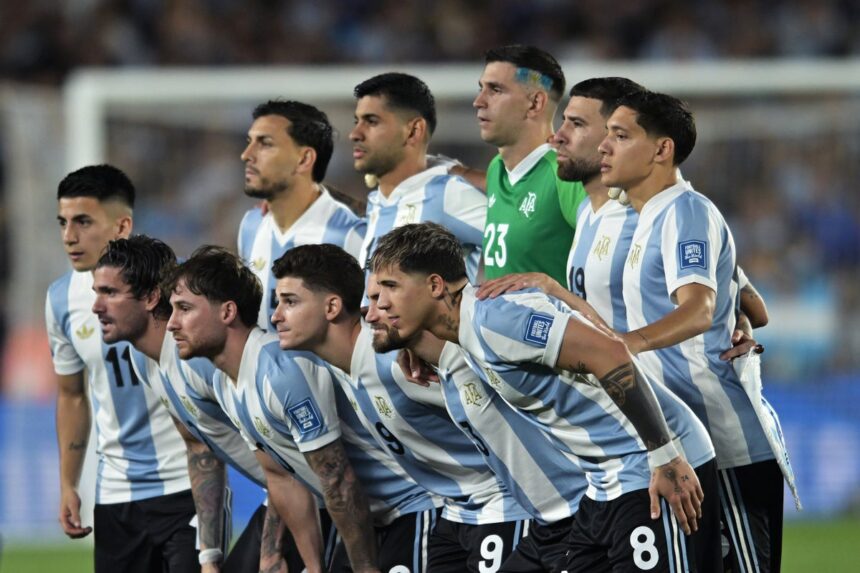
World Cup 2026 Squads: Every Player at This Summer’s Tournament
The countdown to the biggest sporting event on the planet is officially on. With the World Cup 2026 kicking off across the United States, Canada, and Mexico on 11 June, the football world is buzzing with anticipation. For the first time in history, the tournament will feature 48 teams, meaning more nations, more stars, and more drama than ever before. As we approach the summer, managers are finalizing their rosters, and the race to secure a spot on the plane is reaching fever pitch.
- Breaking Down the 48-Team Expansion: More Players, More Stories
- Confirmed World Cup 2026 Squads: The Full List So Far
- Bosnia and Herzegovina (Announced 11 May)
- England (To be announced 22 May)
- United States (Host Nation)
- Brazil
- Expert Analysis: The Tactical Trends Shaping Squads
- Predictions: Who Will Thrive and Who Will Struggle?
- Conclusion: The Stage Is Set for a Historic Summer
This year, the rules have shifted slightly. Each country must submit a final squad of between 23 and 26 players—including at least three goalkeepers—to FIFA by the strict deadline of 2 June. If a player gets injured after that date, he can only be replaced by someone from a pre-submitted 55-man preliminary squad, and that swap must happen no later than 24 hours before the team’s opening match. This creates a fascinating tactical puzzle for managers, who must balance depth with flexibility.
We’ve already seen the first domino fall: Bosnia and Herzegovina became the first nation to confirm their 26-man squad on 11 May. Meanwhile, England boss Thomas Tuchel is set to name his final group on 22 May, and other federations will follow throughout the month. Here is your complete guide to every squad, every player, and the storylines that will define the 2026 World Cup.
Breaking Down the 48-Team Expansion: More Players, More Stories
The expansion from 32 to 48 teams is the most radical change in World Cup history. It means 1,248 players will officially be listed on tournament rosters—a staggering number that guarantees fresh faces and Cinderella stories. For smaller nations like Panama, Cape Verde, and Uzbekistan, this is a golden opportunity to etch their names into football folklore.
But the bigger squads also create selection headaches. Managers now have the luxury of carrying 26 players, which allows for more tactical versatility. Expect to see teams bring an extra striker for plan B or a specialist defender for set-piece situations. Here’s what the expanded format means for the biggest contenders:
- Depth over stardom: Teams like Brazil and France can afford to leave out a big name because they have five world-class options per position.
- Injury insurance: With the 55-man preliminary list, coaches can react to late fitness scares without panic.
- Youth opportunities: Teenagers like Lamine Yamal (Spain) and Endrick (Brazil) are almost certain to make the cut, bringing raw energy to the biggest stage.
One key tactical shift: the deadline of 2 June means squads will be announced in waves throughout May. Keep an eye on the 22 May date for England, as Tuchel’s choices will set the tone for the European heavyweights. Bosnia’s early announcement on 11 May was a statement of intent—they want to build momentum early.
Confirmed World Cup 2026 Squads: The Full List So Far
As of mid-May, only a handful of nations have officially locked in their 26-man groups. But the floodgates are opening. Below is the growing list of confirmed squads, with analysis on the key selections and surprise omissions.
Bosnia and Herzegovina (Announced 11 May)
Manager Sergej Barbarez has gone for a blend of experience and youth. The squad is headlined by veteran striker Edin Džeko, who at 40 years old will be playing in his fourth World Cup. Key inclusions: Miralem Pjanić returns for a swansong, while Benjamin Tahirović provides midfield steel. The surprise? Leaving out defender Sead Kolašinac due to a lingering fitness issue.
England (To be announced 22 May)
Thomas Tuchel’s first major tournament as England boss is under a microscope. The 22 May announcement will likely include Harry Kane as captain, Jude Bellingham as the creative hub, and Bukayo Saka on the wing. The battle for the third goalkeeper spot is intense, with Jordan Pickford and Aaron Ramsdale locks, but Dean Henderson pushing hard. Expect Tuchel to name a 26-man group heavy on versatility—players like Cole Palmer and Declan Rice are guarantees.
United States (Host Nation)
Manager Gregg Berhalter has a deep pool to choose from, but the pressure is immense. Christian Pulisic will lead the line, supported by Weston McKennie and Tyler Adams (if fit). The big question is the goalkeeper spot—Matt Turner is the favorite, but Ethan Horvath and Drake Callender are in contention. The USMNT squad is expected to be announced around 25 May.
Brazil
Brazil’s 26-man list is always a talking point. Neymar is expected to be included despite a patchy club season, while Vinícius Júnior and Rodrygo are automatic picks. The real drama is in defense: Marquinhos and Éder Militão are locks, but Gabriel Magalhães is knocking on the door. Brazil’s squad drop is slated for 28 May.
Expert Analysis: The Tactical Trends Shaping Squads
This World Cup is not just about who is selected—it’s about how the squad is built. With 26 players, managers are increasingly prioritizing positional flexibility. A player who can cover both full-back and winger, or a midfielder who can drop into defense, is gold dust. Here are the key trends I’m seeing from the early squad announcements:
- The utility player premium: Look at Bosnia’s inclusion of Amir Hadžiahmetović—he can play central midfield, right-back, and even as a makeshift winger. Expect similar picks from every top nation.
- Set-piece specialists: With knockout games often decided by dead balls, managers are carrying dedicated set-piece takers. England’s James Ward-Prowse is a prime candidate for a surprise call-up.
- Goalkeeper depth: The rule requiring three goalkeepers means the third-choice spot is no longer a token gesture. Teams are picking shot-stoppers who are also good with their feet, like Ederson (Brazil) or Manuel Neuer (Germany).
- Youth vs. experience: The 55-man preliminary list allows managers to take a risk on a teenager like Warren Zaïre-Emery (France), knowing they have a veteran backup in the extended pool.
One bold prediction: Germany under Julian Nagelsmann will name a squad with only two traditional strikers, relying instead on Florian Wirtz and Jamal Musiala as false nines. This is a high-risk, high-reward strategy that could define the tournament. Meanwhile, Argentina will lean heavily on Lionel Messi’s leadership, but their squad will be built around a compact defensive block—expect Lisandro Martínez and Cristian Romero to be the bedrock.
Predictions: Who Will Thrive and Who Will Struggle?
Based on the squad trends and early confirmations, here are my expert predictions for the 2026 World Cup:
- Dark horse to watch: Morocco. Their 2022 semi-final run was no fluke. With Achraf Hakimi and Hakim Ziyech leading a deep squad, they have the defensive organization to trouble any giant.
- Group stage shock: Canada, as co-hosts, will cause an upset. Their squad is built around Alphonso Davies and Jonathan David, and the home crowd in Vancouver will be a 12th man.
- Player to watch: Jude Bellingham (England). At 22, he is the complete midfielder. If England’s squad clicks around him, he could win the Golden Ball.
- Potential flop: Portugal. Despite a star-studded squad including Cristiano Ronaldo and Bruno Fernandes, their defensive fragility could see them exit early. The 26-man squad will expose their lack of a world-class center-back.
The 2 June deadline is the final checkpoint. After that, every injury becomes a crisis. Keep an eye on France—if Kylian Mbappé picks up a knock in a pre-tournament friendly, their entire strategy unravels. The 55-man list gives them a safety net, but no team wants to lose its talisman.
Conclusion: The Stage Is Set for a Historic Summer
The World Cup 2026 is shaping up to be the most unpredictable tournament in history. With 48 teams, 26-man squads, and a host of new tactical wrinkles, the beautiful game is about to be redefined. From Bosnia’s early squad drop on 11 May to England’s big reveal on 22 May, every announcement adds a new layer to the narrative.
For players, making the final 26 is the culmination of a lifelong dream. For fans, it’s the start of a month-long festival of football. And for managers, it’s a chess match where every piece matters. As the squads roll in, one thing is clear: the 2026 World Cup will be a celebration of depth, diversity, and the relentless pursuit of glory.
Bookmark this page—I will update it daily as every nation confirms their roster. The countdown to 11 June has begun, and the world is ready to watch history unfold.
Source: Based on news from Yahoo Sports.