Zverev’s Serve Delivers Masterclass, Halts Tien’s Dream Run in Australian Open Quarter-Finals
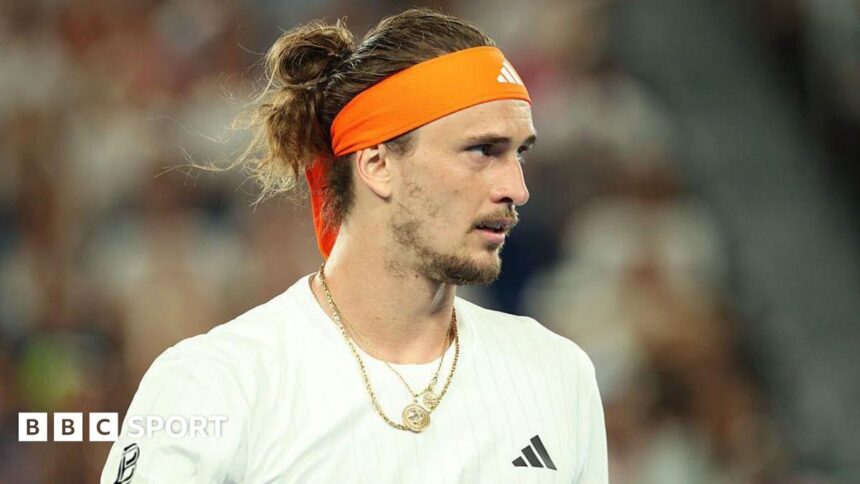
Under the lights of Rod Laver Arena, where history is so often made, Alexander Zverev faced down a potential changing of the guard with the oldest weapon in tennis: an unbreakable serve. The German third seed, a pillar of the tour’s established elite, weathered a ferocious challenge from American sensation Learner Tien, advancing to the Australian Open semi-finals 6-3, 6-7 (5-7), 6-1, 7-6 (7-3). In a match defined by pressure and power, Zverev’s right arm was the difference, a cannon that fired 24 aces and systematically dismantled the fairytale run of a 20-year-old who threatened to rewrite the record books.
A Serve to Give Thanks For: The Statistical Dominance
In his post-match remarks, Zverev didn’t mince words. He looked directly at the camera and thanked his serve. It was less a boast and more a statement of fact, a recognition of the tool that saved him on a night where Tien’s fearless groundstrokes and elastic defense pushed him to the brink. The numbers paint a picture of near-impenetrable service dominance:
- 24 aces peppered the Tien service box, many at critical junctures.
- A solitary double fault in a high-stakes Grand Slam quarter-final is a testament to immense technical and mental discipline.
- Winning 76% of first-serve points meant that when Zverev landed his first delivery, he was in near-total control of the rally.
- He faced only three break points across the entire match, saving two of them.
This wasn’t just serving well; it was a serving masterclass. Against an opponent whose returning has devastated higher seeds this fortnight, Zverev turned his service games into a fortress. “On the big points, I served well. On the break points, I served well,” Zverev stated, pinpointing the tactical simplicity that won him the match. When rallies extended, Tien often had the upper hand, but Zverev’s primary strike weapon ensured those rallies happened on his terms, or not at all.
Tien’s Valiant Stand: The Spark of a Future Star
To focus solely on Zverev’s serve is to do a disservice to the monumental effort from Learner Tien. The young American, ranked 29th, carried the weight of a nation’s hopes and the tantalizing prospect of becoming the youngest men’s semi-finalist in Melbourne since 1990. For a set and a half, he absorbed Zverev’s power and gave it back with interest. His second-set tiebreak victory was a masterpiece of clutch tennis, showcasing a competitive heart that belied his years.
Tien’s game is built on explosive movement and a flat, penetrating backhand that he used to repeatedly open the court. His bid to reach the last four in Melbourne was very real, shaking Zverev’s foundation and proving that his earlier upsets were no fluke. While the physical toll perhaps showed in the third-set dip, his resilience to force a fourth-set tiebreak confirmed his elite mentality. This tournament was not a Cinderella story; it was an announcement. Learner Tien has arrived, and his ceiling appears limitless.
Expert Analysis: The Anatomy of a Big-Match Serve
What separates a good serve from a match-winning serve at the Slam level? Zverev’s performance was a clinic in the nuanced role of the delivery. It’s not merely about speed. His 24 aces came from a devastating combination of factors:
Placement Over Power: While Zverev can hit the 135 mph range, his most effective serves were often well-placed slices wide in the deuce court and heavy kicks to Tien’s backhand in the ad court. This strategic variation prevented Tien from settling into a returning rhythm.
The “Free Point” Economy: In a physically grueling four-set match, the ability to hold serve with minimal energy expenditure is priceless. Each ace or unreturned serve conserved vital stamina for the critical return games, ultimately allowing Zverev to surge in the fourth-set tiebreak.
Psychological Warfare: Consistently landing big serves on break points erodes an opponent’s belief. After saving key break points with unreturnable serves, Tien’s shoulders visibly slumped at moments. The serve became a psychological barrier as much as a tactical one.
This victory, securing Zverev’s place in his 10th Grand Slam semi-final, underscores his evolution. Once a player whose serve could desert him under pressure, it is now the bedrock of his game in the biggest moments.
Predictions: Zverev’s Path to the Final and Beyond
With this hurdle cleared, what lies ahead for the three-time Grand Slam finalist? The landscape of men’s tennis is shifting, but Zverev remains a constant force. His semi-final opponent will present a vastly different challenge, likely requiring more baseline endurance and tactical nuance. However, this serving performance sends a clear message to the field: to beat Alexander Zverev in Melbourne, you must be prepared to break a wall.
His run here, particularly following his gut-wrenching defeat in last year’s final, demonstrates a formidable mental reset. The serve is his weapon, but the composure to wield it under the quarter-final pressure of a hungry young opponent speaks to a champion’s mindset. If he maintains this level of service dominance, he transforms from a contender into the outright favorite in any match he plays. The quest for that elusive first major title feels more tangible than ever.
Conclusion: A Victory Forged by Precision
The 2024 Australian Open quarter-final between Alexander Zverev and Learner Tien was a match of dual narratives. One, the continued ascent of a brilliant young star whose future is blindingly bright. The other, the reaffirmation of a seasoned champion using his most refined tool to dictate his destiny. In the end, Zverev’s serving masterclass was the defining chapter.
He didn’t just beat Learner Tien; he contained a phenomenon with pinpoint accuracy and ice-cool execution. As Zverev marches into his second consecutive Australian Open semi-final, he does so with the confidence of a man whose game is built on the most reliable foundation in tennis. He thanked his serve. For anyone watching, it was abundantly clear why. In a tournament of surprises, Zverev’s power-serving formula remains a constant, and it is now just two wins away from Grand Slam redemption.
Source: Based on news from BBC Sport.