Notre Dame vs. USC: A Fabled Rivalry Hits an Unprecedented Pause
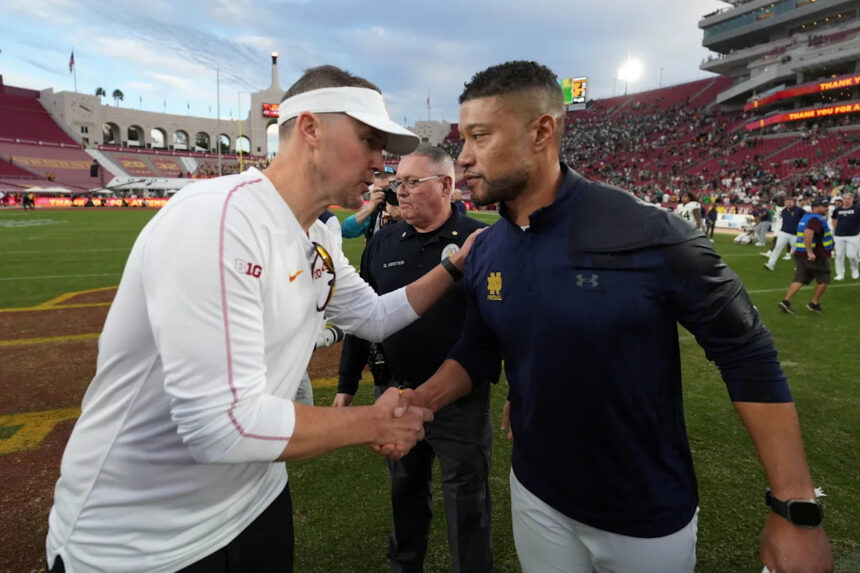
For nearly a century, the annual clash between Notre Dame and USC has been a cornerstone of college football, a coast-to-coast spectacle dripping with tradition, Heisman moments, and national championship implications. It is a rivalry defined by its consistency, played every year since 1946 with only a pandemic-induced hiccup in 2020 breaking the streak. Now, according to a report from Yahoo! Sports, the sport is poised to lose one of its most iconic annual events. Negotiations to extend the series have collapsed, putting the Notre Dame-USC rivalry on an indefinite hiatus after the 2024 season, with hopes for a revival not until at least 2030. This isn’t just a scheduling quirk; it’s a seismic shift in the sport’s landscape, driven by the cold, hard calculus of conference realignment and the College Football Playoff.
The End of an Era: Why Tradition Is Taking a Back Seat
The report indicates that the two institutions tried valiantly to find a path forward. The primary obstacle was the sacred traditional post-Thanksgiving date. For USC, now fully integrated into the Big Ten conference schedule, playing a powerhouse like Notre Dame in late November presents a tangible risk. A loss that late in the season could be devastating to a team’s College Football Playoff resume, a modern reality that now outweighs decades of tradition. The attempt to move the game to Week Zero—the weekend before the official start of the season—ultimately failed to materialize as a solution.
Furthermore, the structural complexities are immense. Notre Dame, while independent in football, maintains a scheduling alliance with the ACC, committing to five games against that conference annually. USC’s dance card is filled with rigorous Big Ten travel and matchups. Synchronizing an open date that works for both, while also navigating television contracts and avoiding competitive disadvantages, proved to be a bridge too far. The negotiations falling through signals a new era where conference obligations are the dominant force in shaping the sport’s biggest games.
A Rivalry Forged in History, Interrupted by War and Now Realignment
To understand the weight of this pause, one must appreciate the rivalry’s remarkable endurance. Since the first meeting in 1926, the series has been a near-constant.
- 97 total meetings would have been reached in 2025.
- 79 consecutive years played (excluding 2020’s COVID-19 cancellation).
- Only one other significant pause: a three-year break from 1943-1945 due to World War II travel restrictions.
This impending hiatus, therefore, is unprecedented in the modern era. It is not born from global conflict but from the internal restructuring of the sport itself. The series gave us the drama of the “Bush Push,” the brilliance of players from Marcus Allen to Tim Brown, and countless games with national title hopes on the line. The fact that it can be shelved, even temporarily, underscores how profoundly the business of college football has changed.
Expert Analysis: The Cold Calculus of Modern College Football
This decision is a stark case study in the new priorities of elite college football programs. “The Notre Dame-USC game was a tentpole event that transcended the standings,” says Dr. Amanda Roberts, a sports historian. “It was about national branding, regional pride, and recruiting visibility from Chicago to Los Angeles. Today’s model, dictated by massive conference media deals and the expanded College Football Playoff, prioritizes securing a playoff berth above all else. A late-season loss to a rival independent could now be seen as an unnecessary risk for USC within the Big Ten structure.”
The move also highlights the precarious position of Notre Dame’s independence. As the sport consolidates into two super-conferences, the Fighting Irish’s ability to maintain a national schedule filled with rivals like USC, Stanford, and Navy becomes exponentially harder. Each of those schools now has primary allegiances elsewhere, squeezing Notre Dame’s scheduling flexibility. The loss of the USC game is the most significant symptom of this pressure to date.
Predictions and the Road to 2030
What does the future hold for this storied rivalry? The report’s suggestion of a 2030 restart is a hopeful placeholder, but not a guarantee. Several factors will influence if and when the golden helmets and cardinal jerseys meet again regularly:
- Playoff Expansion Impact: The new 12-team College Football Playoff format could lessen the fear of a late-season loss, potentially making a November game palatable again for USC.
- Conference Schedule Evolution: The Big Ten’s future scheduling models, especially with the addition of more West Coast teams, may create more flexibility.
- Television Pressure: Networks, understanding the immense value of this matchup, may financially incentivize a renewal.
- Fan and Alumni Demand: The outcry from both fanbases will be a constant drumbeat, applying pressure to administrators.
The most likely scenario is an intermittent series post-2030, perhaps a two-or-three-game contract every decade, rather than the annual fixture fans have cherished. This would mirror how other historic, non-conference rivalries like Texas-Texas A&M have been preserved in the realignment era.
Conclusion: A Necessary Loss in a Changing Game
The pause of the Notre Dame-USC rivalry is a profound loss for college football’s soul. It severs a tangible link to the sport’s history, a weekend that was as much a holiday as a game for two of the nation’s most passionate fanbases. The sight of the Trojan Marching Band in South Bend or the Leprechaun in Los Angeles will become a memory for the latter half of this decade. This decision is a direct, unambiguous consequence of the sport’s shift toward a professionalized, conference-centric, playoff-driven model. While necessary from a cold, strategic viewpoint for the universities involved, it sacrifices a piece of the game’s unique fabric on the altar of progress and profit. The hope for a revival in 2030 remains, but the era of this rivalry as an unwavering annual testament to college football’s tradition is, for now, over.
Source: Based on news from Yahoo Sports.