The One Play Matt Hasselbeck Would Change: A Super Bowl Regret That Still Echoes
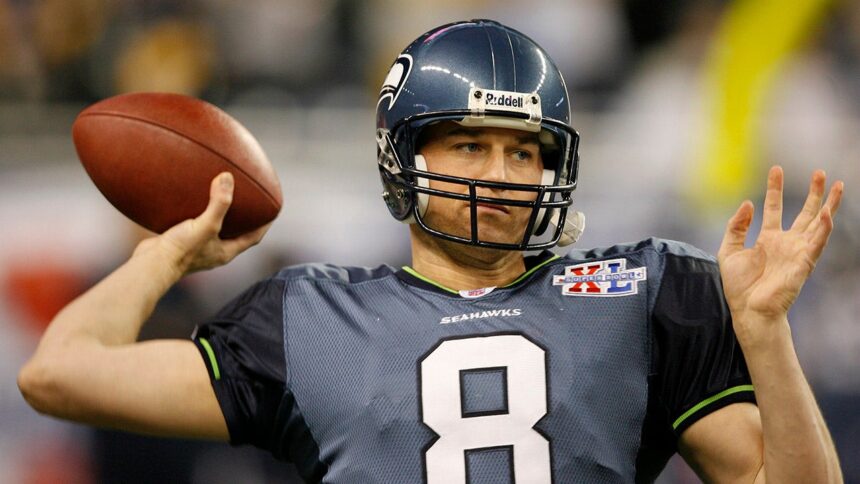
For the Seattle Seahawks and their fervent 12th Man, Super Bowl XL remains a specter in franchise lore. The 21-10 loss to the Pittsburgh Steelers in Detroit is a game dissected not for glorious triumph, but for a cascade of what-ifs—controversial officiating, untimely mistakes, and a singular, lingering regret from the man under center. Nearly two decades later, as the Seahawks prepare for another championship stage, former Pro Bowl quarterback Matt Hasselbeck has opened up about that fateful night, revealing the one decision he would irrevocably take back. In an exclusive interview with Fox News Digital, Hasselbeck didn’t point fingers at the flags that didn’t fly or the breaks that didn’t come. Instead, he turned the mirror on himself, isolating a critical moment that haunts the memory of Seattle’s first Super Bowl journey.
The Crucible of Super Bowl XL: A Game of Inches and What-Ifs
The 2005 Seattle Seahawks were a powerhouse. Led by league MVP Shaun Alexander’s record-setting 28 touchdowns and Hasselbeck’s efficient command of Mike Holmgren’s West Coast offense, they stormed to a 13-3 record and dominated the NFC. The Super Bowl stage was set for coronation. Yet, from the outset, the game felt unmoored. Key penalties negated big plays, a trick-play touchdown pass from Steelers wide receiver Antwaan Randle El stretched the lead, and Seattle’s offense, so potent all season, found itself in a relentless fistfight.
Hasselbeck’s stat line—26 of 49 for 273 yards, one touchdown, and one interception—tells a story of volume but not victory. The interception, however, is the nexus of his lasting regret. It wasn’t just any pick; it was a moment of compounded misfortune that shifted the game’s tectonic plates. Early in the fourth quarter, with the Seahawks trailing 14-10 and driving near midfield, Hasselbeck dropped back on 3rd and 18. Under pressure, he unleashed a deep pass intended for wide receiver Darrell Jackson. The throw was intercepted by Steelers safety Chris Hope. In the ensuing chaos, Hasselbeck, attempting to make a tackle, was flagged for a low block on Pittsburgh’s Joey Porter. The penalty gifted the Steelers 15 extra yards of field position.
But for Hasselbeck, the regret isn’t about the tackle attempt or the flag. It’s about the decision that preceded it all.
Hasselbeck’s Reveal: The Audible That Still Echoes
In his candid reflection with Fox News Digital, Hasselbeck pinpointed the exact moment he wishes he could rewrite. “If I could go back and change one thing, it’s not the throw or the tackle,” Hasselbeck explained. “It’s the play call at the line of scrimmage. We had a check system for that particular blitz look, and I checked to the deep pass. In hindsight, with it being 3rd and forever, the smarter, more patient play was to take the check-down, live to fight another day, and pin them with a punt.”
This is the profound insight of a quarterback two decades removed from the heat of the battle. The regret isn’t about physical error but strategic decision-making. The Steelers showed a pressure look, Hasselbeck made an aggressive, high-reward check, and it backfired spectacularly. The interception didn’t just end the drive; it sapped momentum and handed a stout Steelers team a short field and psychological leverage.
This revelation speaks volumes about Hasselbeck’s growth and the nature of Super Bowl legacy. The game is often remembered for external factors, but a player’s most enduring thoughts often center on their own agency—or lack thereof. “You prepare all week, all season, for those looks,” Hasselbeck said. “In that moment, your instinct is to be the hero, to make the big play to get right back in it. But Super Bowls are often won by the team that makes the fewest mistakes, not the most spectacular plays.”
Beyond the Regret: The Legacy of That Seahawks Team
While the loss in Detroit left a permanent scar, Hasselbeck’s perspective is not one of bitterness. He emphasizes the pride in that team’s accomplishment and the foundation it laid for the Seahawks’ future. That 2005 squad broke the ceiling, proving Seattle could be a destination for championship contention.
- Offensive Juggernaut: The offense, with Alexander, Hasselbeck, and All-Pro left tackle Walter Jones, was one of the most efficient in NFL history.
- Cultural Cornerstone: The run to the Super Bowl galvanized the Pacific Northwest fanbase, cementing the “12th Man” as a permanent NFL force.
- The Bridge to Future Success: The heartbreak of XL created a hunger and a template that Pete Carroll and Russell Wilson would later use to break through and win Super Bowl XLVIII.
“We didn’t get the result, but we showed what was possible in Seattle,” Hasselbeck noted. “That experience, as painful as it was, became a part of the franchise’s DNA. The next generation saw it, learned from it, and finished the job.”
Modern Parallels: Lessons for Today’s Seahawks and Beyond
As the Seahawks enter a new era, Hasselbeck’s regret holds timeless lessons for any quarterback or team on the sport’s biggest stage. The margin for error is microscopic. The balance between aggression and patience is delicate.
In today’s NFL, where analytics and aggression often dictate going for it on fourth down and pushing the ball downfield, Hasselbeck’s reflection is a crucial counterpoint. It underscores the value of situational intelligence. Knowing when to swing for the fences and when to play the field position game is a skill that separates champions from contenders. His experience is a case study in the psychological weight of the Super Bowl, where the pressure can distort even the most prepared player’s judgment.
For current Seahawks quarterback Geno Smith and head coach Pete Carroll, the lesson is clear: a championship blueprint requires not just explosive plays, but also flawless decision-making in critical moments. The ghosts of Super Bowl XL remind every player that legacy is often defined by a handful of choices under duress.
A Final Whistle on What Might Have Been
Matt Hasselbeck’s career is one of remarkable resilience and success—a three-time Pro Bowler who led multiple franchises to the playoffs. Yet, the human element of sports ensures that our greatest disappointments often speak the loudest in memory. His willingness, nearly 20 years later, to isolate and articulate his one key regret from Super Bowl XL is a testament to his competitiveness and his clarity.
It wasn’t a penalty flag. It wasn’t a dropped pass. It was an audible at the line of scrimmage—a decision made in a split second that he has replayed for a lifetime. In that admission lies a powerful truth about professional sports: the plays not made, the checks not called, can linger as long as the highlights. As Seattle chases future glory, the echo of that one play in Detroit serves as a poignant reminder. In the quest for the Lombardi Trophy, the path is paved not only by the spectacular throws we make, but by the prudent ones we choose not to.
Source: Based on news from Fox Sports.