To Boo or Not to Boo? The Roar of Dissent Dividing Football
The final whistle blows, but it’s drowned out by a sound far more cutting. It’s not the roar of triumph, but the cascade of boos, raining down from the stands onto the players in the famous home shirts. This scene, once a rarity reserved for the most abject of failures, is becoming a staple of the modern football soundtrack. But is this vocal disapproval a supporter’s sacred right, a necessary catharsis, or a corrosive act that undermines the very team it targets? We asked fans and pundits, and the debate is as fierce as any derby day clash.
The Sound of Discontent: More Than Just a Bad Result
Booing is not new. However, its frequency and intensity appear to be on the rise. This isn’t merely about losing. It’s a complex language of frustration aimed at perceived lack of effort, bewildering tactical decisions, or a growing disconnect between the club and its community. In an era of skyrocketing ticket prices and players on astronomical wages, fans feel their investment – financial and emotional – grants them a stake. The boo, therefore, becomes their most immediate shareholder vote.
Former England goalkeeper Joe Hart, who has faced his share of criticism from the stands, offers a player’s perspective steeped in understanding. “It’s part of the game,” he acknowledges. “Fans pay their money, they’re passionate. When you’re not performing to the level expected, it’s a natural reaction.” Hart identifies a crucial line, however. For him, the issue isn’t spontaneous reaction during a poor performance, but pre-meditated negativity. “When it’s targeted or personal, or it starts from the first minute, that’s different. That doesn’t help anyone.”
The Pundits’ Verdict: A Clash of Philosophies
The BBC punditry team embodies the divide. Danny Murphy, the former midfielder, stands as a staunch traditionalist against the practice. “I never liked it, I never agreed with it,” Murphy states firmly. He argues that booing your own team is inherently counter-productive. “It creates anxiety, it spreads fear. Players make more mistakes, they start hiding.” For Murphy, the true supporter’s role is unconditional during the 90 minutes, a twelfth man whose energy can lift, not suppress. His stance is clear: save the criticism for the pub or the phone-in, not the stadium.
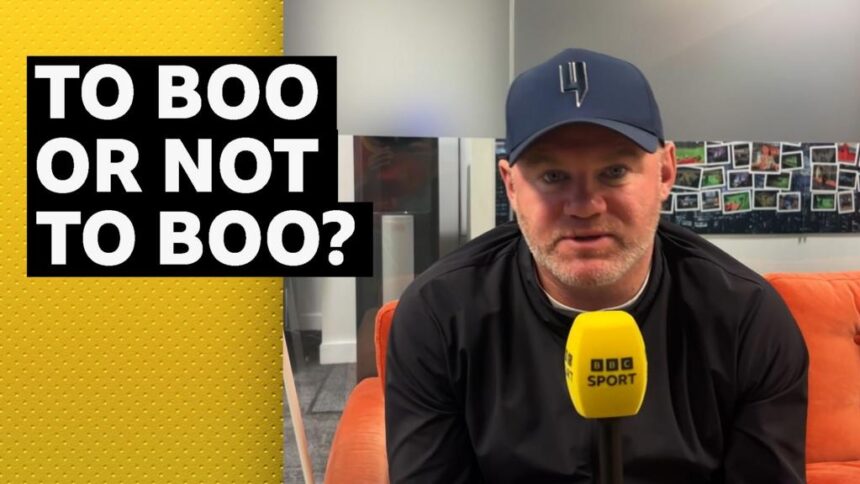
Wayne Rooney, however, brings the pragmatism of a former captain and manager. He recognizes booing as an inevitable, if unwelcome, part of the football ecosystem. “As a player, you have to accept it,” Rooney says. He reframes it not as a personal attack, but as a barometer of expectation. “It shows the fans care. They’re not happy with what they’re seeing, and they’re expressing it.” For Rooney, the onus is on the players and staff to change the narrative through performance, to turn those boos back into cheers. It’s a challenge, not a condemnation.
The Fan’s Dilemma: Passion vs. Support
In the stands, the moral calculus is personal. We spoke to supporters across the leagues:
- The Purist: “I never boo. Ever. My role is to support, through thick and thin. Booing is what away fans do.”
- The Realist: “If I’ve spent £50 and travelled 200 miles to watch a team not try, I have a right to tell them. It’s honest feedback.”
- The Strategic Booer: “I’ll boo at half-time or full-time to send a message to the board or the manager, never to sabotage the players during play.”
- The Apologist: “It makes me cringe. We become a laughing stock, and it hurts our recruitment. What top player wants that atmosphere?”
This spectrum reveals the core tension: is fan passion defined by unwavering loyalty, or by the freedom to voice honest, critical passion? The modern fan is often both devotee and consumer, a duality that fuels the internal conflict.
The Psychological Impact and the Slippery Slope
The effect of booing on players is a critical part of the equation. Sports psychologists suggest it can trigger a threat state, impairing decision-making and composure. Young players and new signings are particularly vulnerable. Conversely, some argue that professional athletes at the highest level should be resilient enough to handle it—that it’s part of the pressure they’re paid to withstand.
However, the slippery slope is a real concern. What begins as frustration with a result can morph into targeted abuse of individuals, creating a toxic environment that is impossible to perform in. It can also inadvertently unite the opposition. The line between justified dissent and harmful negativity is perilously thin and easily crossed in the heat of a collective groan.
The Future of Fan Expression: Where Do We Go From Here?
So, what’s the prognosis? The boo is unlikely to be silenced. It is a too-ingrained form of protest. However, its evolution may be shaped by several key trends:
- Fan Engagement & Ownership: As fans gain greater stakes in clubs (e.g., through supporter trusts), formal channels for dissent may reduce the need for vocal outbursts.
- The Player-Fan Social Media Gap: Direct, online interaction can sometimes vent steam that might otherwise be heard in the stadium.
- Data-Driven Fandom: With access to advanced stats, fan criticism may become more nuanced, moving beyond the raw emotional reaction of the boo.
- The “Event” Experience: As matchdays become more about overall entertainment, clubs may actively work to cultivate a more consistently positive atmosphere.
The prediction is not for the eradication of booing, but for a more conscious conversation about its use. The most successful clubs will be those that bridge the empathy gap—where players visibly share the fans’ passion and pain, and where fans feel heard and respected, reducing the impulse for public condemnation.
Conclusion: The Uncomfortable Symphony of Modern Fandom
The debate over booing is, at its heart, a debate about what it means to be a fan in the 21st century. It is the clash between unconditional support and demanding accountability. Both Danny Murphy’s protective stance and Wayne Rooney’s accepting one contain truth. Booing is a powerful, immediate language, but like any language, its impact depends on its intent, its target, and its frequency.
Perhaps the final word should go to the pragmatist, Joe Hart, who captures the essential duality: “It’s never nice, but it’s real.” The roar of dissent will remain part of football’s uncomfortable symphony. The challenge for clubs is to ensure it doesn’t become the dominant melody, and for fans to remember that while their voice is powerful, its ultimate goal should be to lift their team, not to bury it. In the end, the most devastating sound for any club is not the boo, but the silence of an apathetic, disengaged crowd who have simply stopped caring enough to make any noise at all.
Source: Based on news from BBC Sport.