Old Trafford’s Time Warp: Defensive Chaos, Unforgettable Drama, and a Classic is Born
The Theatre of Dreams has witnessed countless spectacles, but on a sun-drenched afternoon that felt ripped from a different era, it staged a Premier League match that defied modern logic. This was not the sterile, system-driven football of the contemporary elite. This was a glorious, unhinged, and breathtaking throwback—a 4-4 draw between Manchester United and Bournemouth that served as a chaotic masterpiece, leaving managers, players, and fans in a state of bewildered exhilaration.
A Script Torn to Shreds: Eight Goals of Pure Bedlam
From the first whistle, the match pulsed with an erratic energy. Bournemouth, fearless and fluid under Andoni Iraola, sliced through United’s midfield with alarming ease. The opener, a clinical finish from Justin Kroupi, was a sign of things to come. United, powered by individual moments of brilliance from Bruno Fernandes—who scored twice—and the relentless Alejandro Garnacho, kept clawing back. But every time they found parity, their defensive fragility was exposed again. Dominic Solanke’s predatory instinct, a thunderbolt from Marcos Senesi, and a late, late Bournemouth equalizer painted the picture of a side in structural disarray. This was not a game of tactical chess; it was a frantic, end-to-end pinball match where defensive organization was a forgotten concept.
- Justin Kroupi’s early strike set the chaotic tone, punishing passive United defending.
- Bruno Fernandes’ double showcased leadership and quality, but papered over glaring cracks.
- Bournemouth’s relentless transitions exposed United’s non-existent midfield shield and disorganized back line.
- The final scoreline of 4-4 was a perfectly absurd reflection of 90 minutes of glorious anarchy.
Managerial Verdicts: Bewilderment and a Nod to Entertainment
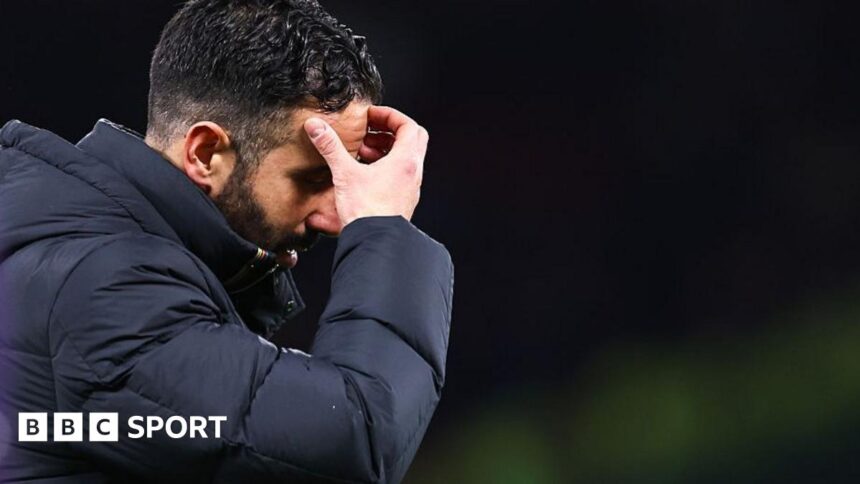
The post-match reactions were as telling as the action. Bournemouth’s Andoni Iraola, a coach revered for his structured pressing, could only shrug at the madness he had presided over. “Really difficult to explain,” he admitted, before landing on the perfect summary: “But I prefer 4-4 to 0-0.” It was an admission that this game had transcended coaching manuals. Across the technical area, Manchester United’s Ruben Amorim distilled his feelings into one word: “Fun.” For a manager whose future is under intense scrutiny, it was a revealing choice. It acknowledged the spectacle while subtly underscoring the unsustainable, heart-attack-inducing nature of his team’s performance. This was not a blueprint for success; it was a wild ride.
The clinical operators in the dugout, as they so often are, were rendered spectators to the chaos. Their meticulously planned patterns dissolved in the face of sheer unpredictability, a testament to the raw, untamed spirit that still occasionally erupts in the Premier League.
A Throwback to United’s Unruly Past
For long-time observers of Manchester United, this game evoked a peculiar sense of déjà vu. Not the dominant Ferguson era, but the tumultuous, often chaotic periods that have followed. The defensive chaos on display—the gaping holes in midfield, the disconnected press, the individual errors—felt like a “greatest hits” compilation of the post-Ferguson years. There was a lack of control, a reliance on moments over methodology, that has defined much of the last decade. Yet, within that chaos, there also flickered the classic, never-say-die attacking spirit the club prides itself on. The problem, starkly illustrated, is that the latter can no longer consistently compensate for the former in today’s game.
This match was a throwback to Man Utd’s past, but not a romantic one. It was a vivid, high-definition reminder of the unresolved issues and identity crises that have plagued the club. The difference now is that the Premier League is filled with teams like Iraola’s Bournemouth, too well-coached and confident to be intimidated by the shirt, ready to ruthlessly exploit any disarray.
What Comes Next: A Classic Memory, But a Stark Warning
In the annals of Premier League history, this 4-4 draw will be filed under “classic.” It had everything a neutral could want: stunning goals, relentless drama, and a narrative that twisted until the final second. For Bournemouth, it is a monumental point and a statement of their thrilling evolution under Iraola. They are no longer plucky survivors; they are proactive protagonists.
For Manchester United, the implications are far more complex. The match created an unforgettable memory for fans, but it also raised alarm bells that cannot be unheard. The defensive chaos is systemic. The midfield was overrun. The team’s shape was too often a mere suggestion. While the fight to come back was commendable, the constant need to do so is a damning indictment of their foundational setup.
Predictions for United’s future remain fraught. Games like this prove they possess the attacking spark to hurt anyone, but they also confirm they have the structural integrity of a house of cards. Until the fundamental issues of balance, discipline, and defensive cohesion are solved—whether under Amorim or another architect—United will remain the Premier League’s ultimate box-office enigma: capable of the sublime and the ridiculous, often within the same breathtaking, chaotic minute. This Old Trafford thriller was a gift to the footballing world, but for those in charge at Manchester United, it must be treated as a glaring, eight-goal warning.
Source: Based on news from BBC Sport.