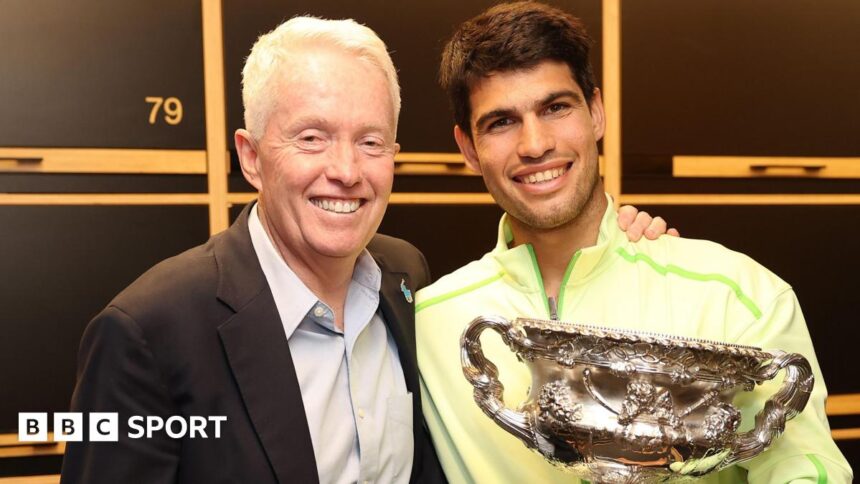
Australian Open Architect Craig Tiley Appointed as New USTA Chief Executive
In a seismic shift that bridges two hemispheres of the tennis world, the United States Tennis Association (USTA) has pulled off a blockbuster executive signing. Craig Tiley, the visionary force behind the modern Australian Open and CEO of Tennis Australia for over a decade, has been appointed as the new chief executive of the USTA. This move sees one of the sport’s most successful and sometimes controversial administrators crossing the Pacific, tasked with steering American tennis into its next era. Tiley’s departure from Melbourne Park, after 13 transformative years, and his impending leadership in New York signal a new chapter for both the USTA and the global tennis landscape.
From Melbourne Park to Flushing Meadows: Tiley’s Trailblazing Journey
Craig Tiley’s journey to the pinnacle of tennis administration is as unconventional as it is impressive. A South African native, Tiley first made his mark not in boardrooms, but on the courts as a highly successful college coach at the University of Illinois. His coaching acumen, which led the Fighting Illini to an NCAA championship in 2003, forged a deep understanding of the American tennis ecosystem—a connection that undoubtedly played a role in this stunning appointment.
He joined Tennis Australia in 2005 and ascended to the CEO role in 2013. Under his stewardship, the Australian Open underwent a metamorphosis. Tiley championed a player-centric, fan-first philosophy that propelled the tournament from a season-opening event to a “Grand Slam of the Asia-Pacific,” rivaling the prestige and commercial power of Wimbledon and the US Open. His tenure was defined by bold innovations:
- Pioneering the “Happy Slam” brand, focusing on fan experience and player conditions.
- Massive investments in Melbourne Park infrastructure, including retractable roofs and new arenas.
- Aggressive commercial and broadcast deals that significantly increased revenue.
- Navigating the immense challenges of the COVID-19 pandemic, which included strict quarantine protocols to stage the 2021 event.
This last point cemented his reputation as a resilient, if divisive, operator. The 2022 deportation of Novak Djokovic over his vaccination status, a saga that played out under Tiley’s watch, highlighted the high-stakes pressures of modern sports administration. Now, the 64-year-old will bring this complex blend of visionary ambition and pragmatic execution to the USTA, replacing Lew Sherr, who departed for a role with the New York Mets.
Expert Analysis: What Tiley Brings to the USTA Table
Tiley’s appointment is a clear signal that the USTA board is seeking transformative leadership. His success in Melbourne was not accidental; it was built on a specific, replicable playbook. Analysts point to several key areas where his impact will be immediately felt.
Commercial Acumen and Event Elevation: Tiley is a master at maximizing a tournament’s commercial potential. The US Open is already a financial juggernaut, but insiders suggest the USTA is looking for growth in digital media, international broadcast rights, and premium hospitality. Tiley’s experience in packaging the Australian Open as a two-week festival, not just a tennis tournament, will be closely studied. Could we see a further evolution of the US Open fan experience, perhaps with more integrated entertainment or technology?
Player Relations and High-Performance Pathways: As a former coach, Tiley speaks the language of players and development. His deep ties to the collegiate system are a unique asset for American tennis, which has struggled at times to seamlessly transition junior talents into tour professionals. His player-centric approach in Melbourne—often cited by athletes as a key reason for loving the event—could help improve the USTA’s relationship with American pros and attract even more international stars to engage with its development programs.
Strategic Global Vision: Tiley operates with a global mindset. He successfully positioned the Australian Open as a gateway to the Asian market. For the USTA, his international perspective could be invaluable in expanding the reach of the US Open brand, forging new partnerships, and navigating the complex politics of the International Tennis Federation (ITF) and ATP/WTA tours. In a statement, Tiley said, “I’ve long admired the organisation’s leadership in growing the game across the United States and the extraordinary success of the US Open,” indicating a desire to build upon, not dismantle, existing strengths.
Predictions: The Future of American Tennis Under Tiley’s Leadership
The arrival of such a formidable external candidate inevitably sparks predictions about the future direction of American tennis. The transition, set to be formalized later this year after Tiley ensures a smooth handover in Australia, will be one of the most watched stories in sports administration.
First, expect a comprehensive audit of the USTA’s operations. Tiley is a data-driven leader known for challenging the status quo. This could lead to a reshuffling of priorities within the organization’s substantial budget, potentially with a greater emphasis on high-performance outcomes and measurable growth metrics for grassroots participation.
Second, the US Open itself may see subtle but significant evolutions. While its late-summer slot and iconic status are untouchable, Tiley could push for technological innovations in broadcasting, enhanced player facilities, or new fan engagement strategies learned from the Australian Open’s playbook. The goal will be to widen the gap between the US Open and other tournaments, solidifying its position as the sport’s most lucrative and glamorous event.
Finally, and perhaps most critically, the pressure will be on to develop the next generation of American Grand Slam champions. The USTA has invested heavily in its player development system with mixed results. Tiley’s holistic understanding of the pathway—from juniors to college to the pros—could lead to a strategic pivot aimed at creating a more consistent pipeline of top-10 talent. Success here would be the ultimate legacy of his tenure.
A Cross-Continental Legacy in the Making
Craig Tiley’s move from Tennis Australia to the USTA is more than a job change; it is a landmark moment in tennis history. Rarely does an architect of one Grand Slam’s success get the keys to another. His appointment underscores the globalized nature of modern sports management, where proven winners are recruited across borders to replicate success.
For Australian tennis, it is the end of an era. Tiley leaves behind a vastly improved tournament and organization, but also one that faces the immediate challenge of finding a successor capable of filling his sizable shoes. For American tennis, it is a bold bet on a proven commodity—a leader known for both his golden touch and his thick skin.
The ultimate question is whether Tiley’s Melbourne magic can translate to the unique challenges and opportunities of the American market. Can he grow participation in a crowded sports landscape? Can he elevate an already-massive event to new heights? Can he help produce American champions? If his track record is any indication, the USTA has secured a CEO who will not be afraid to swing for the fences. The tennis world will be watching, with bated breath, to see if this cross-continental gamble results in a grand slam for the future of the sport in the United States.
Source: Based on news from BBC Sport.