Dopers Are Beating the System: Athletics Integrity Chief Sounds Alarm on Stalled Anti-Doping Fight
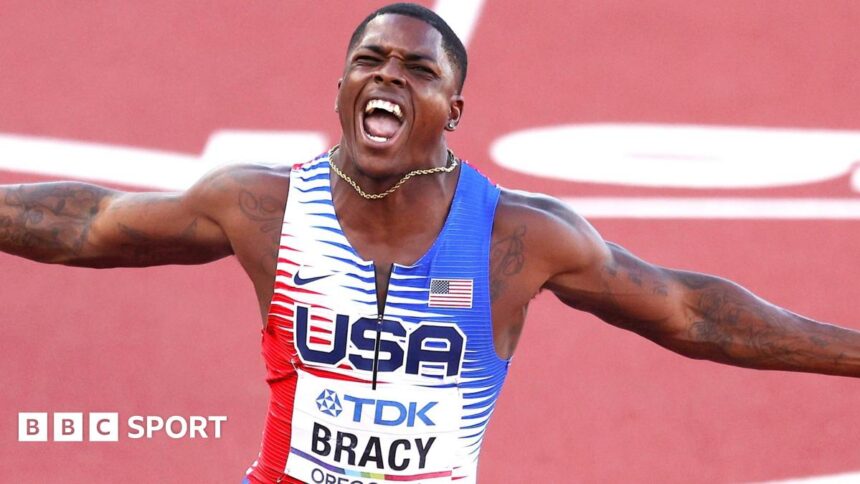
The image of the lone whistleblower, armed with nothing but a conscience and damning evidence, has become a modern archetype in the fight for truth. In anti-doping, it is increasingly becoming the last line of defense. The case of Bracy-Williams, an elite athlete caught not by a routine test but by a tip-off from a whistleblower to US authorities, is not an anomaly. It is a symptom of a system in crisis. According to David Howman, the seasoned chairman of the Athletics Integrity Unit (AIU) and former long-serving Director General of the World Anti-Doping Agency (WADA), the cheats are winning. In a stark and sobering assessment, Howman declares the global anti-doping apparatus has “stalled,” allowing intentional dopers at the highest level to prosper in the shadows.
The Stalled System: Howman’s Damning Verdict
David Howman is not an outsider lobbing criticism from the sidelines. With 13 years at the helm of WADA and now leading track and field’s premier investigative body, his perspective is born of decades inside the war room. When he states, “Let’s be honest and pragmatic – the system has stalled,” the sporting world must listen. His central thesis is alarming in its simplicity: anti-doping science and methodology have not kept pace with the sophistication of dopers. The traditional model—relying heavily on scheduled urine and blood tests—is being systematically gamed by athletes with access to advanced pharmacology, micro-dosing regimens, and insider knowledge of testing windows.
“Intentional dopers at elite level are evading detection,” Howman asserts. “We are not effective enough nowadays in catching cheats.” This isn’t a failure of effort by under-resourced testers; it’s a fundamental structural deficit. The dopers operate on the cutting edge, often with compounds designed to be undetectable or with methods to manipulate biological passports. The asymmetry of information and resources between the cheater and the regulator has never been greater. The Bracy-Williams case is a perfect microcosm: without that specific human intelligence, the violation might never have been uncovered, suggesting countless others are slipping through the net.
Beyond the Test Tube: The New Frontiers of Anti-Doping
If the current system is stalled, what will it take to restart it? Experts agree the future lies not in doing more of the same, but in a radical shift towards intelligence-based policing and long-term forensic analysis. The whistleblower-led capture is a clue, pointing to the critical need for robust, protected informant networks within the athlete entourage—coaches, doctors, and even teammates.
The focus is moving from catching the substance in the body to uncovering the conspiracy behind it. Key pillars of this new approach must include:
- Enhanced Financial and Forensic Investigations: Following the money trail, investigating supply chains, and using forensic accounting to find anomalies in an athlete’s spending can be more revealing than a urine sample.
- Longitudinal Data Analysis: Expanding the Athlete Biological Passport concept to monitor a wider range of biomarkers over an entire career, creating a physiological “fingerprint” that is harder to manipulate without raising flags.
- Investment in Predictive Science: Proactively funding research into next-generation performance-enhancing drugs and gene-editing techniques, aiming to develop tests before the substances hit the black market.
- Global Legal Pressure: Treating sophisticated doping rings as criminal conspiracies, leveraging laws against fraud, racketeering, and trafficking of unapproved medicines.
This paradigm shift requires a cultural change within anti-doping agencies themselves, from lab-centric organizations to hybrid entities employing investigators, data scientists, and intelligence analysts alongside biochemists.
The Looming Crisis: Predictions for a Sport at a Crossroads
If the current trajectory continues, the implications for elite sport are profound and deeply damaging. Howman’s warning is a precursor to several potential futures, none of them ideal.
First, we could enter an “Era of Assumed Skepticism,” where every extraordinary performance is met with immediate public and media doubt, regardless of an athlete’s clean record. This erodes the essential joy of sport—the celebration of human achievement. Second, the credibility of major events, especially the Olympic Games, could be irreparably harmed. When fans start to believe the podium is populated by the best chemists rather than the best athletes, the commercial and cultural model of sport collapses.
Furthermore, the burden will fall disproportionately on clean athletes, who must submit to ever-more invasive testing protocols to prove their innocence in a climate of suspicion. The psychological contract between athlete and fan is at risk of breaking. The most dire prediction is a bifurcated sport: a public-facing “clean” layer and a hidden, high-stakes underground where doping is an open secret, managed by unscrupulous agents and doctors, much like the darkest days of cycling’s past.
Restoring Integrity: A Call for Radical Collaboration
The path forward is arduous but not impossible. Restoring momentum requires a level of collaboration and investment that has so far been elusive. Howman’s stark honesty is the necessary first step—a diagnosis that admits the patient is ailing.
National governments must step up, recognizing that doping is not just a sports issue, but a public health and criminal justice issue. Increased public funding for independent anti-doping research and law enforcement cooperation is non-negotiable. Sport governing bodies must be willing to redirect a more significant portion of their vast commercial revenues towards integrity units like the AIU, granting them true independence and subpoena-like powers.
Perhaps most importantly, the ethical athlete majority must be empowered and amplified. Creating stronger, safer channels for clean athletes to report wrongdoing, and ensuring they have meaningful representation in anti-doping governance, can turn the tide from within. The sporting ecosystem must protect its own.
The whistleblower in the Bracy-Williams case provided a flicker of light, exposing a single cheat. But relying on sporadic acts of conscience is no way to run a system built on fairness. David Howman’s message is a fire alarm. The anti-doping engine has stalled, and while the mechanics argue over the tools, the cheats are racing ahead. Restarting it demands more than tune-ups; it requires a complete redesign, fueled by political will, financial commitment, and an unwavering belief that sport must be saved from itself. The battle is not yet lost, but as Howman makes clear, we are currently losing. The time for pragmatic, hard-nosed action is now.
Source: Based on news from BBC Sport.