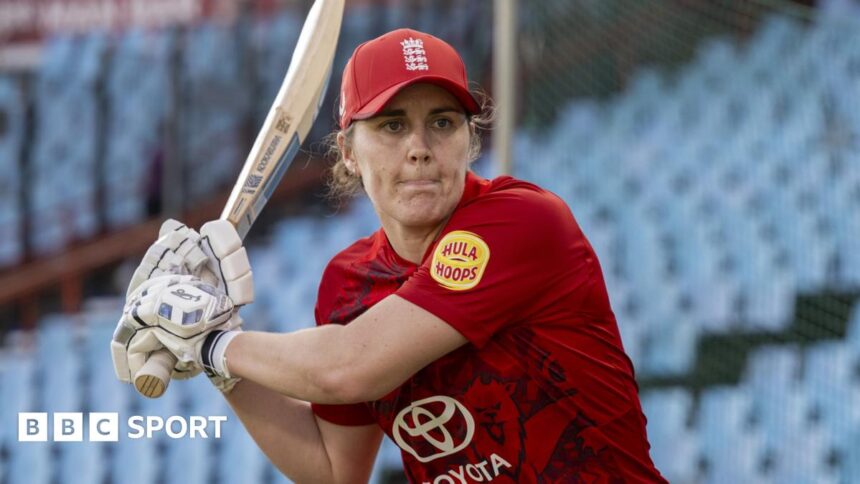
England Women’s Cricket: Army Camp to Forge World Cup Warriors as Domestic Cricket Takes a Backseat
In a bold and unprecedented move designed to sharpen mental steel ahead of a pivotal summer, the England women’s cricket team will skip this weekend’s round of domestic fixtures to attend a high-intensity boot camp with the British Army. The decision, announced by the England and Wales Cricket Board (ECB), signals a clear shift in philosophy under the new leadership of captain Nat Sciver-Brunt and head coach Charlotte Edwards. With the ICC Women’s T20 World Cup looming on the horizon, the message is unequivocal: complacency is not an option.
The 15-strong squad will converge at an undisclosed location in the UK for a weekend programme that the management describes as focusing on “decision-making, resilience and delivering high performance when the pressure is turned up.” This is not your typical pre-season bonding session. This is a deliberate, tactical intervention to rewire the team’s mindset under extreme duress. As a sports journalist who has covered the women’s game for over a decade, I can tell you this: England are not just preparing to play cricket; they are preparing to survive a war of attrition in the Caribbean later this year.
Why the Army? The Psychology Behind the Boot Camp
The timing of this camp is no accident. It arrives exactly one week before England’s first international of the summer – the opening ODI against New Zealand on Sunday, 10 May. Traditionally, this period is reserved for fine-tuning batting and bowling drills against domestic opposition. But Edwards and Sciver-Brunt have torn up the script.
The rationale is rooted in modern sports science. Cricket, particularly the T20 format, is a game of split-second choices. A bowler under pressure in the death overs or a batter facing a rampaging spinner in the middle overs often fails not because of a technical flaw, but because of a cognitive one. The army specialises in creating chaos. They replicate the fog of war – the noise, the fatigue, the fear – and then force individuals to execute clear, rational decisions.
“It’s about stripping away the comfort blanket of the nets,” one ECB insider told me off the record. “They want the players to feel uncomfortable. To feel tired. To feel the weight of a bad decision in a high-stakes environment. That’s exactly what the World Cup will feel like when you are facing Sri Lanka or India in a must-win group game.”
This is a direct response to England’s recent history. Under previous regimes, England often looked technically proficient but mentally fragile in knockout tournaments. The 2023 semi-final exit against Australia was a masterclass in pressure buckling. Sciver-Brunt, as captain, knows that talent alone is not enough. You need a squad that can “find a way to win when the bat isn’t middling the ball.”
The Summer Schedule: A Gauntlet Before the World Cup
Let’s break down the brutal run England faces before they even land in the Caribbean for the World Cup, which begins against Sri Lanka on 12 June.
- 10 May: First of three ODIs vs New Zealand
- Late May: Three-match T20I series vs New Zealand (White Ferns)
- Early June: Three-match T20I series vs India
- 12 June: T20 World Cup opener vs Sri Lanka
This schedule is a masterstroke from the ECB’s scheduling team. It essentially forces England to play high-stakes international cricket immediately after the army camp, leaving no room for a slow start. The New Zealand series will be a test of physical freshness after a gruelling weekend. The India series will test their tactical adaptability. By the time the World Cup rolls around, England will have played six T20Is against two of the best teams in the world.
Expert analysis: The decision to skip domestic matches is a double-edged sword. On one hand, it deprives the domestic league of star power for one round, which may frustrate county coaches and fans. On the other hand, it creates a unified, isolated bubble where the squad can build genuine trust and communication under duress. In a World Cup year, the national team must come first. I believe this is the correct call, even if it is unpopular with the domestic purists.
Key Players to Watch: Who Will Thrive Under Military Pressure?
Not every player responds to military-style leadership the same way. Some wilt; others find a new gear. Here are the three England players I believe will benefit most from this camp.
Nat Sciver-Brunt (Captain): Already a proven warrior, Sciver-Brunt is the calmest head in the room. The army camp will likely empower her to delegate more. She needs to learn that leadership isn’t about carrying the team alone. The camp’s focus on collective resilience will help her build a leadership group, not just a captaincy.
Sophie Ecclestone: The world’s No.1 T20I bowler is a quiet assassin. But she has admitted in the past that she sometimes lets frustration boil over when catches are dropped or fielding is sloppy. The army’s ethos of “control the controllable” is perfect for her. If she emerges from this camp with an even more unshakeable mindset, she will be virtually unplayable in the Caribbean.
Danni Wyatt-Hodge: The explosive opener is a player of instinct. Sometimes that instinct works; sometimes it leads to a reckless shot. The decision-making drills in the army camp will force her to slow down her internal clock, to differentiate between a good risk and a dumb risk. If she can add a layer of calculated aggression to her natural flair, she becomes a match-winner on any surface.
Prediction: I expect the middle-order batters, such as Alice Capsey and Heather Knight, to show the most visible improvement. These are players who often get stuck between aggression and defence. The army’s “high-pressure decision-making” drills are designed precisely for that mental gridlock.
The Bigger Picture: A New Era Under Edwards and Sciver-Brunt
This army camp is the most visible sign yet that the Charlotte Edwards-Nat Sciver-Brunt partnership is willing to be radically different. Edwards, a legendary captain herself, has always been a proponent of “uncomfortable learning.” She famously took England to the top of the world by demanding perfection in training. Now, as coach, she is applying that same intensity to the mental side of the game.
Sciver-Brunt, meanwhile, is evolving her captaincy. She was initially seen as a reluctant leader, someone who led by performance rather than words. This camp forces her to be vocal, to direct teammates under chaotic conditions, to be the general on the battlefield. If she can master that, England will have a captain who can out-think the likes of Meg Lanning (Australia) and Harmanpreet Kaur (India).
Critics will say that a weekend with the army cannot fix deep-rooted issues like a fragile top order or a lack of pace in the bowling attack. They are right – it won’t fix technical flaws. But it will fix the gap between what these players are capable of in the nets and what they deliver on the biggest stage. That gap is often the difference between a semi-final exit and lifting the trophy.
Conclusion: The Foundation for a World Cup Charge
As the England squad trades the gentle hum of county cricket grounds for the bark of army sergeants and the sting of cold British mud, they are making a statement. They are saying that they will not be outworked, out-thought, or out-toughened. The decision to skip domestic matches is a sacrifice, but it is a strategic one.
The road to the T20 World Cup is now clear. First, the army camp forges the mindset. Then, the New Zealand and India series test the steel. Finally, the World Cup provides the ultimate proving ground. For England, the summer of 2025 is not about participation. It is about redemption. It is about proving that mental resilience is as important as a perfect cover drive.
If this army camp works, we will see a team that chases 160 with calm, defends 120 with fury, and never, ever panics. If it fails, we will see the same old England – talented, but brittle. My instinct, based on the calibre of leadership under Sciver-Brunt and Edwards, is that this team is about to become the most mentally formidable England side we have ever seen. The domestic season can wait. The war for the World Cup has already begun.
Source: Based on news from BBC Sport.