Jake Canter’s Bronze Medal: A Triumph of Heart Over a Scarred Brain
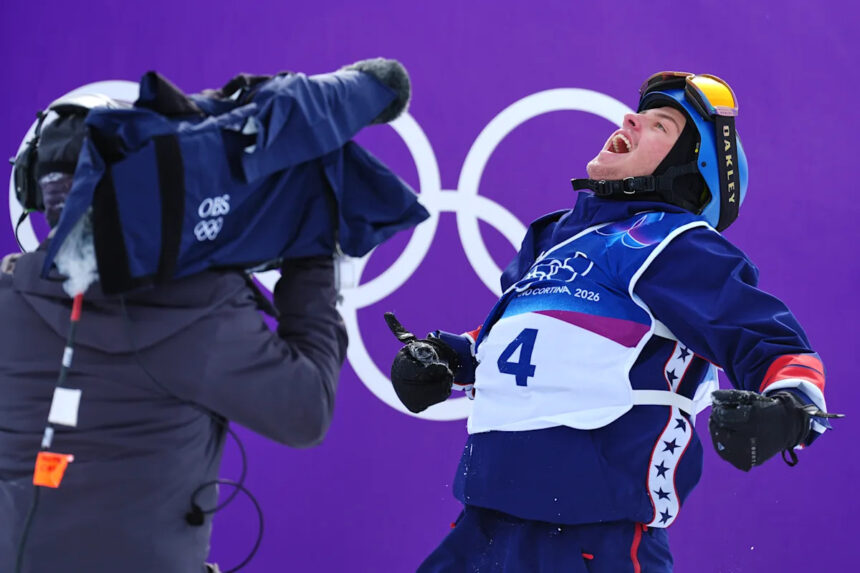
The roar of the Livigno crowd fades to a distant hum. For Jake Canter, standing on the Olympic podium with a bronze medal around his neck, the most profound sound is the silent, defiant beat of his own heart. It’s a rhythm that refused to be silenced nine years ago, when a team of medical experts, staring at scans of his traumatized brain, delivered a verdict meant to protect him: never snowboard again. On Wednesday, that heart powered a slopestyle run that did more than win hardware; it rewrote a prognosis and authored one of the most stirring narratives of these Games—a testament to resilience that no MRI could ever capture.
The Freak Accident That Redefined a Future
In 2015, Jake Canter was a promising 13-year-old rider, his world a canvas of kickers and rails. At an action-sports camp, a routine session on a trampoline turned catastrophic. A fellow athlete’s kick, an accident of terrible timing, connected squarely with young Jake’s head. The resulting traumatic brain injury (TBI) was severe. The immediate aftermath was a fog of confusion, pain, and a daunting battery of tests. The long-term prognosis, delivered with clinical certainty, was a life sentence: his snowboarding dreams were over.
The doctors’ logic was rooted in irrefutable science. Another major impact could be catastrophic. They were safeguarding a patient. But in that hospital bed lay not just a patient, but a competitor—a boy whose identity was already intertwined with the feel of a board beneath his feet. “They were looking at Canter’s brain when they should have checked his heart,” becomes the defining lens through which to view this journey. The medical imaging showed neural pathways; it couldn’t illuminate the unbreakable path of passion that ran from his core to the mountains.
The Long Climb Back: Grit as a Training Regimen
Ignoring the advice to quit was only the first, simplest step. The real journey was a grueling, years-long ascent back to elite performance. Canter’s comeback was not a singular moment, but a daily practice. His training had to evolve, incorporating:
- Neurocognitive rehabilitation: Exercises to rebuild focus, processing speed, and memory—skills as crucial for mapping a slopestyle run as physical strength.
- Hyper-vigilant safety protocols: A renewed, profound respect for protection, likely influencing gear choices and practice habits.
- Mental fortitude training: Overcoming the innate fear that follows a major injury, especially one involving the brain, requires a psychological resilience that rivals physical toughness.
This period was less about defying doctors and more about collaborating with a new team—one dedicated to safely unlocking what his heart demanded. Every cleared jump, every landed trick, was a quiet victory over the shadows of that trampoline accident. He wasn’t just progressing as a snowboarder; he was pioneering a personal roadmap for recovery against the odds.
Analysis: The Bronze That Weighs Like Gold
From an expert sporting perspective, Canter’s bronze-medal run in Livigno was a masterclass in controlled aggression. Slopestyle is a high-stakes puzzle of amplitude, technical difficulty, and execution, where a single hesitation spells disaster. For Canter to perform under Olympic pressure, with the ghost of his injury ever-present, speaks to an athlete operating at peak mental and physical harmony.
Expert analysis suggests his journey likely forged a unique competitor. Athletes who overcome severe injury often develop a superior sense of body awareness and a preternatural calm under pressure. Having faced a far scarier opponent than any rival, the Olympic final may have felt not like a threat, but like a celebration of possibility. His performance wasn’t just about scoring points; it was a narrative delivered through spins and grabs, each trick a sentence in the story of his return.
Furthermore, his podium finish disrupts the traditional “all-or-nothing” narrative of Olympic glory. In this case, the bronze is the ultimate prize, symbolizing a victory that transcends podium placement. It represents a full-circle moment of healing and validation, arguably carrying more emotional weight than any gold medal won from a path of unbroken luck.
The Ripple Effect: Predictions for Canter’s Legacy and Future
Jake Canter’s story instantly transcends sports. He becomes a symbol for anyone facing a long road back from physical or mental adversity. His impact will be felt in two key areas:
1. Inspirational Legacy: Canter’s quote, “I really just hope I made 13-year-old me lying in that hospital bed proud,” will resonate far beyond the snow sports world. He has given a face to the concept of tenacious hope. His story will be used to motivate patients in rehab centers and athletes facing career-threatening injuries, proving that a diagnosis is not a destiny.
2. Competitive Future: With the Olympic medal secured, a massive psychological barrier has been lifted. Predictions for Canter’s sporting future now shift from “if” he can compete to “how high” he can climb. Unburdened by the need to prove his comeback viable, he can focus purely on progression. We can expect:
- A more aggressive pursuit of technical difficulty in his runs.
- A leadership role within the U.S. slopestyle team, mentoring younger riders.
- A potent force in the X Games and World Cup circuit, entering events with the credibility of an Olympic medalist and the fearlessness of a survivor.
Conclusion: The Ultimate Victory Was Never on the Scoreboard
As the Livigno sunset paints the slopestyle course, Jake Canter’s bronze medal catches the light. Its gleam tells a story deeper than its third-place finish. This is not a story about disproving doctors—it is about completing a conversation between a boy’s dream and a man’s determination. The true Olympic bronze medal was merely the physical manifestation of a prize he had already won: the reclamation of his own narrative.
His journey from a hospital bed to the Olympic podium is a powerful reminder that the most important competitions are not always judged by panels. They are fought within the quiet spaces of recovery, in the decision to try one more time. Jake Canter’s legacy is sealed not by the color of his medal, but by the undeniable truth he carved into the mountain: that the will of the human heart, when measured, can be the most powerful force in sports, and in life.
Source: Based on news from Yahoo Sports.