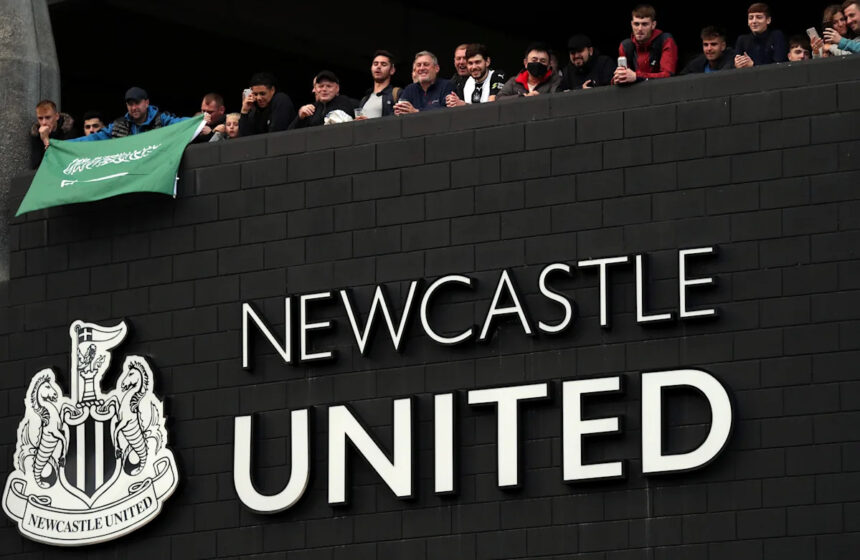
Howe Insists Newcastle’s Saudi Owners Are ‘All In’ Despite LIV Golf Funding Shake-Up
In the high-stakes world of Premier League football, few narratives are as closely watched as the long-term commitment of Newcastle United’s Saudi Arabian ownership. This week, a seismic shift in the global sports landscape sent ripples through the industry: the Public Investment Fund (PIF) announced it will sever its financial ties with the LIV Golf series at the end of the 2026 season, ending a $5 billion investment that rocked the golfing world. Yet, inside the corridors of St. James’ Park, manager Eddie Howe is sending a clear, defiant message: the appetite for glory remains absolutely unchanged.
Speaking to the press on Friday ahead of a crucial Premier League clash with Brighton & Hove Albion, Howe dismissed any notion that the PIF’s strategic pivot away from golf signals a cooling of ambition on Tyneside. Instead, he painted a picture of owners who are more engaged than ever. “The owners and representatives of PIF were over, and it was constructive, good meetings,” Howe revealed. “They clearly care so much about the football club.”
For Newcastle supporters, these words carry significant weight. Since the October 2021 takeover, the club has transformed from a relegation battler into a Champions League contender. But with the sovereign wealth fund now focusing its resources away from the controversial LIV Golf venture, many have questioned whether the Magpies’ transfer budget and infrastructure projects could face headwinds. Here is the expert breakdown of why Eddie Howe is right to be confident—and what this means for the club’s immediate future.
The LIV Golf Exit: A Strategic Rebalance, Not a Retreat
To understand the Newcastle situation, one must first decode the PIF’s move regarding LIV Golf. The fund, chaired by Saudi Crown Prince Mohammed bin Salman, has invested over $5 billion into the breakaway circuit since its 2022 launch. While LIV disrupted the traditional golf establishment, it has struggled to achieve profitability and widespread viewership. The decision to cut funding after the 2026 season is widely seen as a strategic rebalancing—a move to consolidate gains and redeploy capital into ventures with clearer long-term returns.
Critically, this does not mean the PIF is exiting sports. On the contrary, the fund remains deeply embedded in football, esports, boxing, and Formula 1. The acquisition of Newcastle was never a vanity project; it was a cornerstone of the kingdom’s Vision 2030 plan to diversify its economy and enhance its global soft power. Newcastle United is the flagship asset of that sporting portfolio, and the club’s trajectory from mid-table obscurity to European contention has only increased its value.
Howe’s comments reflect this reality. When he says the owners “clearly care so much about the football club,” he is not engaging in empty rhetoric. The proof is in the infrastructure: the club is currently undergoing a £50 million training ground upgrade, stadium expansion plans are being actively explored, and the recruitment strategy has become ruthlessly efficient. A fund that is willing to spend billions on a golf league that lasted only four years is not going to abandon a Premier League institution that is already delivering a return on investment both on and off the pitch.
Eddie Howe’s Role: The Manager as the Ultimate Insider
Few managers in the Premier League enjoy the level of direct, constructive dialogue with ownership that Howe currently possesses. His Friday press conference offered a rare glimpse into the inner workings of the Newcastle boardroom. Howe described his meetings with the PIF representatives as “constructive” and “good,” emphasizing that he was “a small part of that.” This humility is a hallmark of his management style, but it also underlines a crucial point: the long-term vision is being set at the highest level, and Howe is an integral part of executing it.
The relationship between Howe and the PIF is built on trust and results. Since taking over in November 2021, Howe has transformed a squad that was battling relegation into one that finished fourth in the Premier League. He has done so while adhering to the club’s new financial discipline—a far cry from the reckless spending of the Mike Ashley era. The PIF has backed him with key signings like Alexander Isak, Bruno Guimarães, and Sven Botman, but they have also allowed him to develop a distinct tactical identity centered on high energy, defensive solidity, and progressive attack.
Expert Analysis: The LIV Golf withdrawal actually strengthens Howe’s position. It signals that the PIF is becoming more focused and results-driven. They are no longer in the phase of “spend to make a statement”; they are now in the phase of “spend to win sustainably.” This means Howe’s ability to identify value in the transfer market and develop young talent will be even more valuable. A manager who can deliver Champions League football on a net spend that is lower than many of his rivals is exactly the kind of asset a sovereign wealth fund wants to protect.
What This Means for Newcastle’s Transfer Strategy and Ambition
So, what does the immediate future hold for Newcastle United? The most important takeaway is that the club’s ambition is not tied to a single sports venture. The PIF’s investment in LIV Golf was a separate, experimental play. Newcastle is the core of their sporting identity. The fund has already demonstrated a willingness to invest in the club’s long-term health—not just in marquee signings, but in the academy, the scouting network, and the commercial department.
- Transfer Budget: While Newcastle will not operate like Manchester City or Chelsea in terms of pure spending power (due to Profit and Sustainability Rules), the PIF is committed to providing the resources needed to compete. Expect a summer of targeted, high-value additions rather than a scattergun approach.
- Stadium Expansion: The most significant long-term project is the potential expansion of St. James’ Park. The PIF sees the stadium as a revenue-generating asset and a symbol of the club’s status. Plans to increase capacity from 52,000 to over 65,000 are actively being discussed.
- Player Retention: The club’s ability to keep its star players is the ultimate test of ambition. Bruno Guimarães has a release clause, and Isak is attracting interest from Europe’s elite. The PIF’s unwavering commitment, as articulated by Howe, is the signal that these players will not be sold unless the club chooses to sell. The message to the squad is clear: the project is here to stay.
Predictions: Newcastle will finish the 2024-25 season comfortably in the top six and will challenge for a top-four spot again. The summer window will see two or three high-profile signings, likely in the right-wing and central midfield positions. The PIF will also accelerate plans for the training ground and stadium, making Newcastle a more attractive destination for elite talent. The LIV Golf exit will be viewed in hindsight as a footnote—a necessary pruning of a non-core asset that allowed the PIF to double down on its most important sporting investment.
The Brighton Test: A Microcosm of the Newcastle Project
This weekend’s match against Brighton & Hove Albion is a perfect example of the challenge Howe and the PIF face. Brighton, under manager Roberto De Zerbi (now replaced by Fabian Hürzeler), have become the model of a well-run club that sells players for profit while remaining competitive. Newcastle, by contrast, is trying to build a dynasty that keeps its best players and wins trophies.
“It’s always constructive because they clearly care so much about the football club,” Howe said, reflecting on his meetings with the owners. That sentiment will be put to the test on the pitch. A win against Brighton would keep Newcastle in the hunt for European football. A loss would invite questions about consistency. But the underlying message from Howe is that the club’s direction is set, regardless of any single result.
The manager’s calm demeanor in the face of the LIV Golf news is a testament to the stability he has cultivated. He knows that the PIF’s decision to cut ties with golf is not a sign of weakness but of maturity. They are learning, adapting, and focusing their firepower. And Newcastle United is the bullseye.
Conclusion: The Saudi Commitment Is Deeper Than Any Single Investment
In the fast-moving world of football finance, it is easy to panic when a major backer makes a headline-grabbing move. But Eddie Howe’s measured, confident words this week should reassure every Newcastle fan. The PIF’s decision to walk away from LIV Golf is not a prelude to walking away from St. James’ Park. It is a strategic pivot by a sovereign wealth fund that is learning how to win in global sports.
The Saudi owners want success at Newcastle—not just as a hobby, but as a legacy. The $5 billion spent on LIV Golf was a bet on disrupting an old sport. The £305 million spent on acquiring Newcastle was a bet on building a new footballing powerhouse. One of those bets is being folded. The other is being doubled down.
As Howe prepares his team to face Brighton, the message from the manager’s office is unmistakable: the ambition is intact, the funding is secure, and the dream of bringing major silverware to Tyneside is very much alive. The PIF may be leaving the fairways, but they are digging in for the long haul on the hallowed turf of St. James’ Park.
Source: Based on news from Yahoo Sports.