NFL Breaks Silence on Giants Co-Owner’s Epstein Emails as Scrutiny Intensifies
The National Football League, an institution built on public trust and mass-market appeal, finds itself navigating a treacherous off-field crisis. Days before the spectacle of the Super Bowl, the league was forced to address a deeply unsettling revelation: New York Giants co-owner Steve Tisch was among the correspondents in the trove of documents related to convicted sex offender Jeffrey Epstein. The NFL’s carefully worded statement, released Monday, lands in a firestorm of public scrutiny and raises profound questions about accountability at the very highest levels of professional sports.
A Statement Amid the Super Bowl Glare
The timing of the NFL’s response is as calculated as a two-minute drill. The statement emerged just as Commissioner Roger Goodell prepared for his annual pre-Super Bowl press conference, a marquee media event meant to highlight the league’s grandeur. Instead, it risked being overshadowed by questions about the moral compass of one of its most prominent owners. The emails were part of the Justice Department’s release of over 3 million documents, a dump that has continued to ensnare powerful figures across finance, politics, and now, sports.
The league’s statement was characteristically guarded. While not quoting it directly, sources indicate it followed a familiar pattern of acknowledging the seriousness of the matter while emphasizing due process. This is the NFL’s standard crisis playbook: avoid definitive commentary on ongoing legal or investigative matters, express general condemnation of the underlying crimes, and stress that the league expects all personnel to uphold its standards. However, the vagueness of such a stance is being tested like never before.
- Epstein Document Dump: The correspondence was part of a massive 3-million-page release by the DOJ.
- Strategic Timing: The NFL’s statement dropped on the eve of Commissioner Goodell’s flagship Super Bowl press conference.
- Standard Protocol: The league’s response leaned on established procedure, avoiding specific judgment on Tisch while condemning Epstein’s crimes.
Analyzing the Fallout for the Giants and the NFL Shield
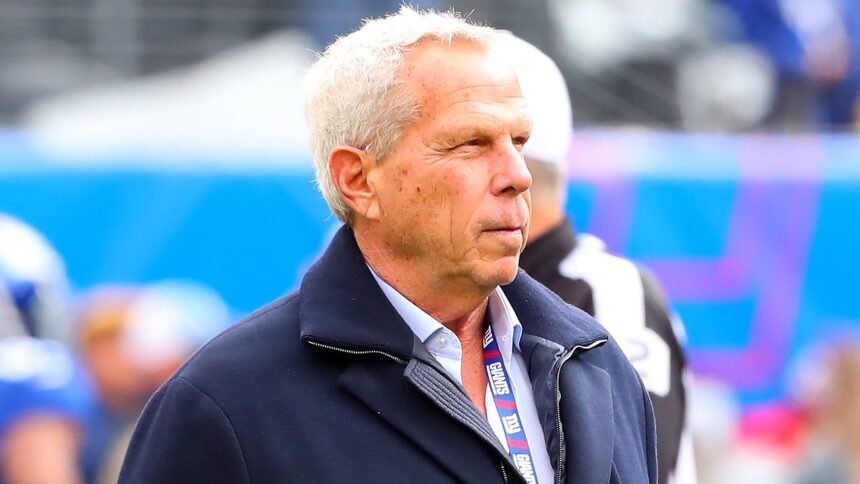
For the New York Giants, one of the league’s most storied and valuable franchises, this is a public relations nightmare. Steve Tisch, alongside the Mara family, is the face of ownership for a team with a massive, family-oriented fanbase. The mere association with Epstein—whose crimes are synonymous with the abuse of power and the exploitation of the vulnerable—strikes at the heart of the brand’s image. Tisch, an accomplished film producer and philanthropist, now has his legacy inextricably linked to this scandal.
Expert analysis suggests the immediate football operations will be unaffected. The Giants’ front office and coaching staff will continue their work. However, the brand damage is significant. Sponsors, who are increasingly sensitive to ethical associations, will be watching closely. The league office itself faces a monumental test of its personal conduct policy, which has historically been wielded more forcefully against players than owners. The glaring question is whether the NFL’s power structure has the will, or even the mechanism, to hold an owner of Tisch’s stature to the same standard.
“The NFL has consistently demonstrated that its disciplinary power is asymmetric,” notes Dr. Elena Harris, a professor of sports ethics and governance. “Players face immediate suspensions for conduct detrimental to the league. For owners, the process is more opaque, often relying on private pressure and the consensus of other owners. The content and context of these emails will be everything. Were they mere logistical, or do they suggest a deeper, more problematic association? The league’s next steps will define its true ethical boundaries.”
Predictions: A Lengthy Legal and Reputational Battle
The path forward is fraught with complexity. This is not a simple matter of a league investigation resulting in a fine or suspension. Predictions for how this unfolds hinge on several key factors:
- Content is King: The specific nature of the emails is the single most important variable. Brief, innocuous correspondence will elicit a different response than evidence of a close, ongoing relationship.
- Public Pressure: Media scrutiny and fan reaction will create a powerful tailwind. If the story gains momentum, the NFL will be forced to act more decisively.
- Owner Consensus: Goodell ultimately serves at the pleasure of the 32 owners. Their collective willingness to sanction one of their own will determine any serious outcome, such as pressure to sell or a suspension.
- Legal Entanglements: Tisch may face no legal jeopardy, but the ongoing scrutiny from civil litigation and media investigations will keep the story alive for months, if not years.
The most likely immediate outcome is a period of tense silence. Tisch may issue a personal statement to clarify and contextualize the correspondence. The NFL will likely state its review is ongoing, effectively kicking the can down the road. However, the long-term prediction is that this episode becomes a permanent stain, a footnote in the franchise’s history that is revisited with every new Epstein-related revelation. It also emboldens critics who argue the league’s culture of accountability does not extend to the owner’s suite.
A Defining Test for the Commissioner and the League’s Culture
This scandal transcends the Giants. It is a stress test for Roger Goodell’s commissionership and the NFL’s self-proclaimed values. For years, the league has marketed itself as a pillar of the community, promoting initiatives focused on youth and social responsibility. The hypocrisy of turning a blind eye to an owner’s association with a convicted child sex trafficker would be too glaring to ignore.
The NFL’s statement is merely the opening move. The real work happens behind closed doors in Park Avenue offices and in private conversations among the ownership cadre. Will they treat this as a serious breach of the league’s integrity, or as a regrettable personal entanglement to be managed quietly? The answer will reveal more about the NFL’s true character than any public service announcement ever could.
In conclusion, the release of the Epstein documents has pulled the NFL into one of the darkest narratives of modern times. Steve Tisch’s involvement, however tangential it may ultimately prove to be, forces the league to confront uncomfortable questions about power, privilege, and consistency. As the Super Bowl’s lights shine brightly, casting a long shadow of sport and celebration, a more sobering drama unfolds in the boardrooms. The NFL’s handling of the Tisch-Epstein correspondence will be remembered not for its legal precision, but for its moral clarity—or lack thereof. The league’s next statement, and more importantly its actions, must demonstrate that the shield it so fiercely protects stands for something more than profit and prestige. It must prove that its standards are not just for show, but for everyone under its employ, from the practice squad player to the owner in the luxury suite.
Source: Based on news from Fox Sports.