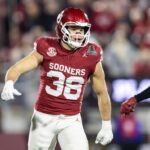
Oklahoma’s Owen Heinecke Files Landmark Lawsuit Against NCAA, Seeks Eligibility for 2026 Season
The battle between collegiate athletes and the governing body of college sports has entered a new, unprecedented phase. In a move that could reshape the landscape of athlete eligibility and the transfer portal, University of Oklahoma linebacker Owen Heinecke has filed a federal lawsuit against the NCAA. The core of the lawsuit is a request for a preliminary injunction that would grant Heinecke an additional year of competition, allowing him to play for the Sooners in the 2026 college football season. With the legal clock ticking, Heinecke’s legal team is pushing for a ruling before next month’s NFL Draft, a timeline that underscores the high-stakes nature of this case for the player’s future.
The Heart of the Heinecke Case: A Quest for a “True” Fifth Year
While specific details of the lawsuit’s argument are still emerging from court filings, the case appears to center on the complex and often unforgiving interaction between the NCAA’s eligibility clock, redshirt rules, and the modern transfer portal. Owen Heinecke, a talented linebacker who began his collegiate career at another institution, is likely contesting the classification of a previous season or seasons.
NCAA rules typically grant athletes five calendar years to complete four seasons of competition. Exceptions are made for medical hardships (medical redshirts) and standard redshirt years, where an athlete participates in a limited number of games. The rise of the transfer portal has added another layer of complication, as players who switch schools can sometimes lose a year of eligibility or see their clock shortened.
Heinecke’s lawsuit against the NCAA suggests a dispute over whether a prior season should count against his four years of play. Potential grounds could include:
- A medical hardship waiver improperly denied by the NCAA for a season lost to injury.
- A dispute over participation counts in a “redshirt” season, where even one snap over the limit can burn a year of eligibility.
- A challenge to the NCAA’s overarching eligibility rules as an unreasonable restraint of trade, following the legal precedents set in recent years.
By seeking an injunction to play in 2026, Heinecke is arguing that, by right, his eligibility clock should extend one year longer than the NCAA currently allows.
Expert Analysis: A Legal Hail Mary with Far-Reaching Implications
Sports law analysts see the Heinecke case as a strategic and aggressive escalation in athlete advocacy. “This isn’t just an administrative appeal; this is taking the fight directly to the courts and asking for immediate, season-altering relief,” says Dr. Amanda Reed, a professor of sports law. “The request for a ruling before the NFL Draft is critical. It positions the NCAA’s decision not just as an eligibility issue, but as one that actively damages his professional prospects.”
The legal strategy is telling. By filing for a preliminary injunction, Heinecke’s lawyers must convince a judge that he is likely to succeed on the merits of his case, that he would suffer “irreparable harm” without the injunction, and that the injunction is in the public interest. Granting an injunction would, in effect, grant Heinecke his extra year while the full lawsuit plays out—a potentially years-long process.
This case also highlights the growing tension between the NCAA’s traditional governance and the new era of athlete empowerment. “The transfer portal was created to provide freedom, but its rules are still enforced by an organization whose authority is under constant legal challenge,” notes analyst Ben Carter. “Heinecke’s lawsuit argues, in essence, that the NCAA’s application of its own rules in his specific case is arbitrary and harmful. A win here could open the floodgates for similar individual challenges, moving beyond broad class-actions to targeted, career-saving litigation.”
Potential Outcomes and Predictions for the 2026 Season and Beyond
The immediate future hinges on a federal judge’s decision. The potential outcomes create wildly different paths for Heinecke, Oklahoma Football, and the NCAA.
Scenario 1: The Injunction is Granted
- Owen Heinecke would be immediately eligible to participate in Oklahoma’s 2025 offseason program with the certainty of playing in 2026.
- This would be a massive victory for the player and a stinging, precedent-setting defeat for the NCAA, encouraging other athletes in similar limbo to pursue litigation.
- For the Sooners, it would secure a veteran, experienced linebacker for their second season in the brutal SEC schedule, providing invaluable depth and leadership.
Scenario 2: The Injunction is Denied
- Heinecke’s prospects for playing college football again diminish drastically. His focus would shift entirely to the NFL Draft or alternative professional leagues.
- The broader lawsuit could continue, but without the immediate playing time, its personal stakes for Heinecke are lowered.
- The NCAA would claim a procedural victory, but the underlying challenges to its authority would remain.
Long-Term Predictions: Regardless of this specific injunction, the trend is clear. The legal and political pressure on the NCAA is unsustainable. We predict increased legislative action at the state level to standardize eligibility rules and a continued erosion of the NCAA’s power to unilaterally deny waivers. The Heinecke case may be one of the last of its kind if a new, more athlete-friendly governance structure emerges.
A Defining Moment in the Athlete Empowerment Era
Owen Heinecke’s lawsuit is more than a personal fight for a final season in Norman. It is a microcosm of the modern college athlete’s experience: navigating a byzantine set of rules created in a different era, where a single administrative decision can alter the trajectory of a career and a life. By choosing the legal path, Heinecke has moved the goalposts, challenging the NCAA not in the committee room, but in the courtroom.
The implications are profound. A victory would empower individual athletes to become the direct agents of change in their own careers, using the judicial system to hold the NCAA accountable. It would further blur the line between amateurism and professionalized litigation. For Oklahoma, the potential to add a seasoned linebacker for the 2026 college football season is a significant football storyline, but the off-field legal drama is where history will be written.
As the NFL Draft approaches, all eyes will be on the federal docket. Whether Heinecke’s suit is successful or not, it marks another definitive step in the ongoing revolution of college sports. The athletes are no longer just asking for a seat at the table; they are building their own, with legal counsel firmly by their side.
Source: Based on news from ESPN.