Ratcliffe’s Immigration Comments Spark Apology, FA Scrutiny, and a National Debate
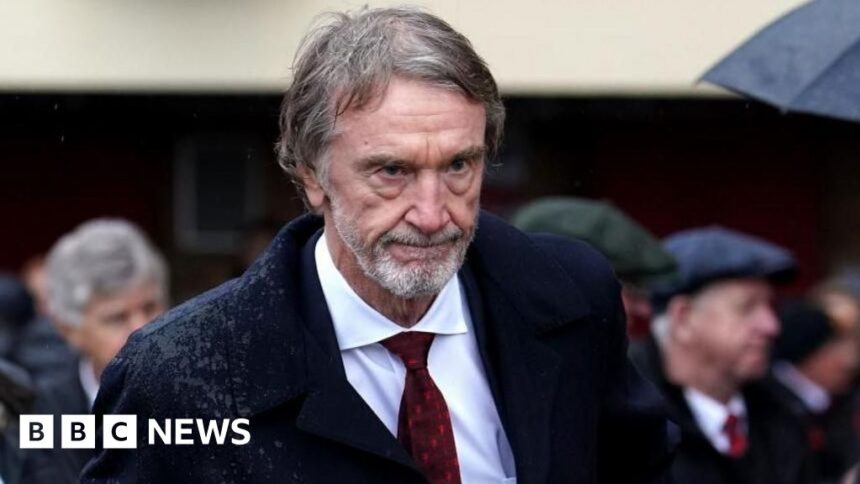
The world of football, often a mirror to society’s most heated debates, has found itself entangled in a controversy far beyond the touchline. Sir Jim Ratcliffe, the billionaire architect of INEOS and co-owner of Manchester United, has issued a partial apology after stating the UK had been “colonised by immigrants.” The remarks, made during a public interview, have ignited a political firestorm, drawn sharp condemnation from Labour leader Sir Keir Starmer, and now potentially place Ratcliffe in the crosshairs of a Football Association investigation. This incident transcends a mere PR misstep; it sits at the volatile intersection of sport, business, politics, and identity, testing the boundaries of free speech and the responsibilities of high-profile football custodians.
The Comments, The Backlash, and The Conditional Apology
Speaking at a business event in London, Sir Jim Ratcliffe, a prominent Brexit supporter, voiced strong views on UK immigration policy. While advocating for a merit-based system to attract talent, his use of the word “colonised” proved explosively contentious. The term, laden with historical weight and negative connotations of subjugation, was immediately seized upon by critics who argued it framed immigration as an hostile invasion rather than a complex social and economic phenomenon.
The backlash was swift and came from the highest level. Sir Keir Starmer, the Prime Minister, labelled the comments “offensive and wrong,” a significant political intervention that underscored the sensitivity of the topic. Facing mounting pressure, Ratcliffe issued a statement the following day. It was an apology, but one with a clear qualification. “I am sorry that my choice of language has offended some people,” he said, carefully expressing regret for the impact rather than the core sentiment. He swiftly pivoted to his central argument: the need for an “open debate” on “controlled and well-managed immigration that supports economic growth.” This framing sets the stage for the multifaceted dilemma now unfolding: a clash between personal belief, public perception, and regulatory oversight in sport.
The FA’s Dilemma: Bringing the Game Into Disrepute?
Ratcliffe’s comments have propelled the issue from the political pages to the sports governance desk. The Football Association is now examining whether his remarks brought the game into disrepute, a powerful and broadly defined charge in its rulebook. This presents a profound challenge for the governing body.
On one hand, the FA has a duty to uphold the inclusive values it publicly champions. Football has worked, albeit imperfectly, to combat discrimination and promote diversity. Comments perceived as inflammatory from one of the game’s most influential figures could be seen as undermining that work and alienating large sections of the domestic and global fanbase. The potential charges could range from improper conduct to bringing the game into disrepute under FA Rule E3.
- Potential FA Charge: Breach of FA Rule E3, which covers “improper conduct” that “brings the game into disrepute.”
- Key Consideration: Were the comments made in a private capacity as a businessman, or does his role as a club owner make them a football matter?
- Precedent: Historical cases are rare for owners on non-footballing comments, setting a potential new benchmark.
On the other hand, the FA must tread carefully to avoid being seen as a political arbitrator. If Ratcliffe’s comments, made outside a football context, are deemed actionable, it sets a precedent for policing the personal views of all club owners, directors, and even players. The FA’s decision will signal where it draws the line between an individual’s right to free speech and its duty to protect the collective reputation of English football.
Expert Analysis: The Tightrope for Modern Football Ownership
This incident highlights the evolving and precarious role of the modern football owner. Figures like Ratcliffe are not just financiers; they are global brand ambassadors for their clubs and, by extension, the Premier League. Their words carry immense weight. “The archetype of the silent, reclusive owner is gone,” notes Dr. Emily Foster, a sports governance expert. “Today’s owners are public faces, and their pronouncements on any topic are instantly amplified by the media megaphone that surrounds elite football. The challenge is that they wear two hats: the private citizen and the custodian of a cultural institution.”
Ratcliffe’s case is particularly nuanced. His business success is built on global operations and a multinational workforce. His vision for Manchester United is inherently global, seeking to restore the club to its former glory, which relies on attracting the world’s best talent—both on the pitch and in the boardroom. There is a perceived tension between advocating for restrictive immigration policies and running a global sporting and commercial empire that thrives on international movement. This paradox is at the heart of the analysis, making his comments not just a political soundbite but a point of scrutiny regarding strategic alignment.
Furthermore, the episode tests the concept of “sportswashing.” While often associated with nation-states, high-profile investments by wealthy individuals can also aim to soften or reshape public personas. Any punitive action from the FA would be a rare check on that power, asserting that association with football’s prestige comes with behavioral expectations.
Predictions and Ramifications: What Happens Next?
The path forward is fraught with uncertainty, but several likely outcomes can be forecasted.
First, the FA is likely to proceed cautiously. A formal charge would be a seismic event, guaranteeing lengthy, expensive, and bitterly contested proceedings. A more probable outcome is a private warning or a negotiated statement reinforcing the game’s commitment to inclusion. The FA may seek to de-escalate, fearing a protracted legal battle over jurisdiction and free speech.
Second, the reputational damage to Ratcliffe, particularly among a segment of Manchester United’s diverse global support, may be more lasting than any regulatory sanction. In the age of social media, fan groups are powerful stakeholders. We can expect continued vocal criticism from supporter trusts and anti-discrimination charities like Kick It Out, who will keep the issue alive in the court of public opinion.
Third, this incident will undoubtedly influence how other owners and club executives communicate. PR teams will tighten messaging protocols, and public appearances will be even more meticulously managed. The era of the off-the-cuff billionaire owner comment may be curtailed, leading to more sanitized, anodyne public statements.
Finally, on a macro level, Ratcliffe has achieved his stated aim of fuelling debate, but at a high personal and institutional cost. The conversation is now as much about the boundaries of acceptable discourse for football’s elite as it is about immigration policy itself.
Conclusion: A Defining Moment for Governance and Discourse
Sir Jim Ratcliffe’s “colonised” comment and its aftermath represent a defining moment in modern football. It is more than a story about a billionaire’s apology; it is a stress test for the governance of the sport and a reflection of the deeply polarized societies in which top-level clubs now operate. The FA’s response will set a crucial precedent on whether the “bring the game into disrepute” clause can be applied to the non-footballing opinions of its most powerful figures.
Ultimately, Ratcliffe’s conditional apology—regretting offence but not the underlying premise—epitomizes the clash at hand. Football clubs are cherished community assets with a duty of inclusion, yet they are owned by individuals with strong personal convictions and the platform to express them. Navigating this tension is the ongoing challenge. As the dust settles, the legacy of this episode will be a heightened awareness that in today’s game, every word from an owner carries a weight far heavier than any trophy, capable of uniting or dividing, building up or tearing down the very fabric of the club’s relationship with its world. The final whistle on this controversy is far from blown.
Source: Based on news from BBC Sport.