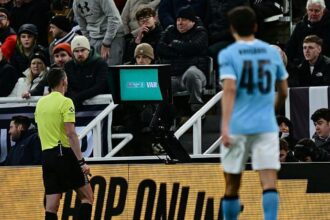
The Whistle Blows, The Screen Glows: Inside the Premier League’s Growing VAR Controversy
The roar of the crowd, the flash of a boot, the ball nestling in the net—these are the moments that define the beautiful game. But increasingly, they are followed by an uneasy, stadium-wide hush. Players stand, hands on hips, staring at an unseen official. Fans watch giant screens, awaiting a verdict from a remote bunker. The Video Assistant Referee, introduced to eliminate controversy, has instead become its epicenter. This season, a stark and troubling trend has emerged: refereeing errors, both on the pitch and in the VAR hub, are not declining; they are rising. The quest for perfection is, paradoxically, highlighting more imperfection than ever before.
The Rising Tide of Error: A Statistical Reality Check
While debates in pubs and on social media often run hot with anecdotal fury, the cold, hard data now confirms the growing sense of unease. The Premier League’s own Key Match Incidents (KMI) panel—a group of experts including former players and coaches—acts as the league’s internal audit. Their latest report is damning. It confirmed another four errors in a single match week, bringing the total for the season to a staggering 54 incorrect Key Match Incidents. To put this into perspective, at the same stage last season, the panel had recorded only 44 errors. This represents a significant year-on-year increase in officiating mistakes.
The nature of these errors is multifaceted. They are not solely the domain of the on-field referee missing a call in real time. A concerning portion stems from the very system designed as a safety net:
- Missed VAR Interventions: Situations where the video assistant should have recommended a review but did not.
- Incorrect VAR Overturns: Instances where the on-field decision was right, but VAR incorrectly advised a change.
- On-Field Mistakes Below Threshold: Subjective errors that, under the protocol’s “clear and obvious” standard, were not corrected.
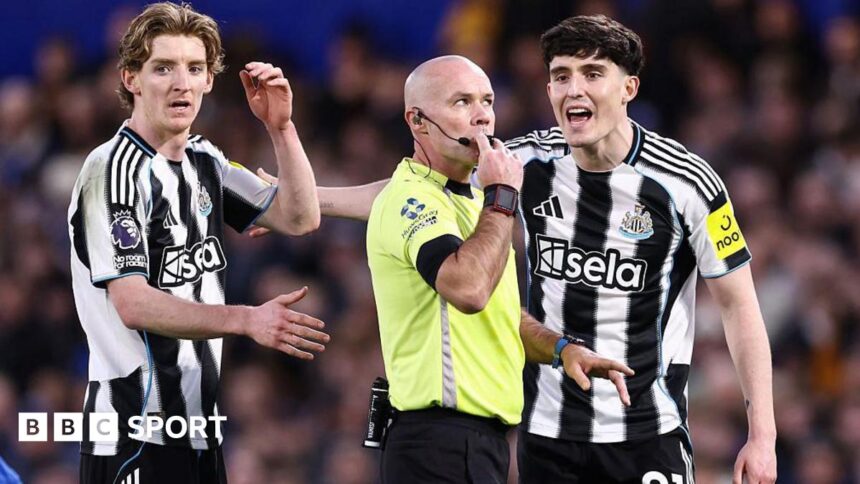
The recent incident at Stamford Bridge, where Newcastle United were denied a clear penalty against Chelsea after a foul on Anthony Gordon, is a textbook example of the kind of high-profile VAR error that erodes public trust. It was a decision so glaring that it dominated the post-match discourse, overshadowing the football itself.
Between the Lines: Why Is This Happening?
Understanding the increase requires looking beyond the simple tally of mistakes. Several interlocking factors are creating a perfect storm for officiating controversy. First, the Premier League’s own officiating body, the PGMOL, points to a broader context. They note that the general trend over recent years is positive, citing 70 mistakes at this stage in the 2023-24 campaign as an improvement on a higher historical baseline. However, this “big picture” view offers little solace to fans of a club on the wrong end of a weekend howler.
The core issue may lie in the fundamental tension at the heart of the VAR protocol: the “clear and obvious” standard. This deliberately high bar was meant to preserve the flow of the game and the authority of the on-field referee. Yet, in practice, it has created a zone of paralyzing subjectivity. What is clear and obvious to a former striker on television is not always clear and obvious to a referee re-watching a monitor at half-speed. This leads to inconsistencies where near-identical incidents receive wildly different treatments week to week, fueling perceptions of incompetence or even bias.
Furthermore, the human element has not been eliminated; it has been relocated and multiplied. We now have multiple officials scrutinizing every potential incident, often under immense time pressure and with the deafening noise of public expectation in the background. The pressure to “get it right” can ironically lead to overthinking, a reluctance to overturn a colleague, or a forensic, frame-by-frame analysis that divorces the decision from the real-time context and spirit of the game.
The Road Ahead: Predictions for a System Under Scrutiny
As the pressure mounts, change is inevitable. The current trajectory is unsustainable for the league’s global reputation. Several developments are likely in the coming seasons. First, expect a summer of intense review and potential protocol tweaks. The “clear and obvious” threshold may be recalibrated or, more likely, its application will be more rigorously standardized through renewed training for both on-field and VAR officials.
Second, the push for semi-automated offside technology will accelerate. While not a panacea for all ills, a system that delivers faster, graphic-led offside decisions would remove one major source of interminable delays and fan frustration, freeing up VAR bandwidth for more nuanced decisions like penalty calls and red cards.
Finally, and most crucially, there will be a greater drive for transparency and communication. The successful experiment with in-stadium announcements of VAR decisions in the FIFA Club World Cup and elsewhere will be heavily debated for Premier League adoption. Allowing fans in the stadium and viewers at home to hear the dialogue between officials, as in rugby and cricket, could rebuild understanding and trust, even when a decision goes against a fan’s team.
Blowing the Full-Time Whistle on the Crisis of Confidence
The beautiful game is, at its heart, a human drama played out with a ball. Technology was brought in to correct human error, but it has instead magnified the complexity of human judgment. The rising error count this Premier League season is not merely a statistical blip; it is a symptom of a system struggling with its own identity and the immense weight of expectation. While the PGMOL sees a positive long-term trend, the short-term reality for clubs, players, and fans is one of increasing frustration and diminishing certainty.
The solution lies not in abandoning technology, but in refining its integration. It requires clearer standards, better communication, and an acceptance that the pursuit of 100% accuracy may be a fool’s errand that strips the sport of its soul. The goal must shift from achieving an unattainable perfection to delivering consistent, understandable, and fair officiating that supports, rather than stifles, the drama. Until that balance is found, the most anxious person in any Premier League stadium will not be the striker through on goal or the keeper facing a penalty, but the referee waiting for a voice in their ear, and the entire sport holding its breath.
Source: Based on news from BBC Sport.