Remembering Rocky: The Unforgettable Brilliance and Tragic Tale of David Rocastle
Twenty-five years on, the football world still feels the absence of a singular talent. The name David Rocastle—affectionately ‘Rocky’ to adoring fans—evokes not just memories of dazzling wing play and thunderous goals, but a profound sense of what might have been. His story is one of explosive talent, a deep bond with supporters, and a cruel, untimely end. As we mark this solemn anniversary, we revisit the legacy of a player who, in a fleeting but unforgettable chapter, became an instant idol at Manchester City.
A North London Prodigy Finds a New Home at Maine Road
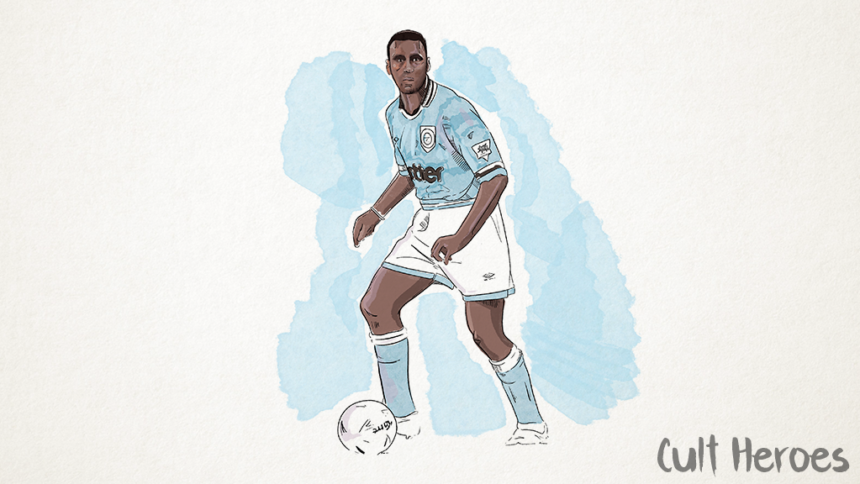
By the time David Rocastle arrived at Maine Road in December 1993, he was already an Arsenal legend. A product of their famed academy, he was the heartbeat of George Graham’s triumphant late-80s side. Rocastle embodied a rare blend of artistry and aggression; a winger with the heart of a central midfielder, capable of weaving magic with deft touches or bulldozing through challenges with surprising power. He won two league titles with the Gunners and earned 14 England caps, his career trajectory pointing perpetually skyward.
However, football’s path is seldom straight. A serious knee injury began a chain of events that led him away from Highbury, via a brief stint at Leeds United. Then, in a move that shocked many, he became part of a straight swap deal valued at £2m with City’s David White. For City fans, it was a signal of intent—a proven, world-class operator was joining the fight. Rocastle made his debut in a 1-1 draw with Blackburn Rovers just before the New Year, and a new love affair, though tragically brief, was born.
Instant Idol: The Rocky Roar at Maine Road
What made David Rocastle’s impact at Manchester City so immediate and so deep? It wasn’t just his pedigree. In a team often characterised by effort over elegance, Rocastle was a technical maestro. He played with a joy and a fearlessness that resonated instantly with the Kippax.
- Direct, Dynamic Wing Play: In an era of traditional wingers, Rocastle was a nightmare for full-backs. He could go outside or cut in, combining pace with close control.
- A Thunderous Shot: His goals were often spectacular, hammered into the net with that powerful, low drive that became his trademark.
- Unwavering Spirit: Despite his technical gifts, he never shirked a challenge. His combative style mirrored the fighting spirit City fans demanded.
He became a beacon of hope and quality in a period of transition. The chant of “Rocky, Rocky!” wasn’t just an appreciation of skill; it was an acknowledgment of a shared heart and soul. He played only 21 league games for the club, scoring twice, but his influence was immeasurable. He was a reminder of what top-level excellence looked like, worn on the sleeve of a sky-blue shirt.
A Legacy Cut Short: The Ultimate Football Tragedy
The tale of David Rocastle is, in its final chapter, a heartbreaking one. After leaving City, he had spells with Chelsea, Norwich, and Hull City, but the spectre of injury never fully left him. Then, in March 2001, the football world was stunned by the news that Rocastle, aged just 33, had passed away after a battle with non-Hodgkin’s lymphoma.
His death was a gut punch to everyone who loved the game. Here was a man in his prime, a father, a former star who had given so much joy, silenced far too soon. The grief at Arsenal was palpable and profound, but it was also deeply felt in Manchester. City fans, who had witnessed his brilliance firsthand, even if briefly, mourned one of their own. The tragedy underscored the fragility beneath the game’s robust exterior. David Rocastle’s legacy was suddenly frozen in time—not as a veteran looking back, but as an eternal talent taken in his prime.
Rocky’s Echo: What His Story Teaches Modern Football
Two and a half decades after his passing, David Rocastle’s story holds powerful lessons for the modern game. In an era of calculated transfers and brand-building, Rocastle represents something purer.
Expert Analysis: Today’s wingers are often judged by metrics: expected assists, dribble success rates, progressive carries. Rocastle’s metrics were emotional. He measured success in roars from the crowd, in the fear in a defender’s eyes, in the connection forged in a single, surging run. He was a complete footballer in a less specialised time, a player who would be worth a fortune in any era, not just for his output but for his undeniable, crowd-lifting presence.
Predictions for Legacy: We predict that as football becomes more data-driven and corporatised, the legend of players like Rocastle will only grow brighter. He represents an authentic, unmanufactured connection between player and supporter. Future generations will watch grainy footage and see not just a great player, but a symbol of football’s enduring soul. His name will forever be invoked in discussions of lost potential and genuine, heartfelt club icons.
Conclusion: More Than a Memory, A Permanent Flame
Remembering Rocky today is about more than nostalgia. It is an active celebration of a spirit that transcends results and trophies. David Rocastle’s time at Manchester City was a shooting star—brief, dazzling, and gone too soon. But its light remains. He achieved that rarest of feats: he became an instant crowd idol not through longevity, but through the sheer, undeniable force of his talent and personality.
Twenty-five years on, the “Rocky, Rocky!” chant would still echo around the Etihad, a testament to a player who, in a handful of months, etched his name into the fabric of the club. His tragic passing reminds us to cherish the artists of the game while they grace the pitch. David Rocastle, the boy from Lewisham who conquered North London and won the hearts of Manchester, remains forever young, forever brilliant, and forever missed. His legacy is not a tragic footnote, but a permanent flame of what football, at its very best, can truly mean.
Source: Based on news from Yahoo Sports.