Why the Canadian Premier League’s ‘Daylight’ Offside Trial Could Redefine Soccer
The Canadian Premier League, a bold upstart in the global soccer landscape, is no stranger to making waves. From a bicycle kick goal in a blizzard that captivated a billion online eyes to its mission of growing the sport in a hockey-mad nation, the CPL has consistently punched above its weight. Now, as it prepares to kick off its eighth season, the league is poised to make a different kind of history—one that could fundamentally alter a core tenet of the beautiful game. The CPL has been selected by the International Football Association Board (IFAB) as the testing ground for a revolutionary new interpretation of the offside rule: the ‘daylight’ principle. This trial has the potential to be the most significant rule change in decades, and all eyes are on Canada to see if it will unlock a new era of attacking soccer.
From Frosty Finals to Frontier Experiments: The CPL’s Audacious Path
Before dissecting the rule itself, it’s crucial to understand the league bold enough to trial it. The Canadian Premier League has built its identity on visibility and audacity. Its most iconic moment remains the 2023 final, where a stunning ‘icicle kick’ bicycle goal in a swirling snowstorm against Cavalry FC became a global viral sensation. That moment, as Cavalry defender Bradley Kamdem noted, was about more than just a trophy. “I think as a young league in a country that’s developing the sport of football, it’s important that we do get that visibility,” Kamdem stated. The CPL has learned that to carve out space, you must be willing to do things differently.
This mindset makes it the perfect laboratory for IFAB’s experiment. As a young league without centuries of entrenched tradition, it can implement and assess change with agility. The ‘daylight’ offside trial is not just a technical adjustment; it’s a statement. It signals the CPL’s role as an innovator, a league willing to challenge convention to potentially improve the global sport. The visibility Kamdem spoke of is now shifting from breathtaking goals in the snow to the very fabric of how the game is officiated.
Demystifying the ‘Daylight’ Rule: A Fundamental Shift
So, what exactly is the ‘daylight’ offside rule? For over a century, the offside law has required an attacker to have at least two defenders, typically including the goalkeeper, between themselves and the goal line at the moment the ball is played forward. The new ‘daylight’ or ‘clear daylight’ interpretation proposes a dramatic shift.
- Traditional Rule: Attacker is offside if any part of their body they can score with (head, torso, feet) is ahead of the second-last defender.
- ‘Daylight’ Rule (CPL Trial): Attacker is only offside if there is a clear gap or ‘daylight’ between them and the defender. If any part of the attacker’s body is level with or behind the defender, they are onside.
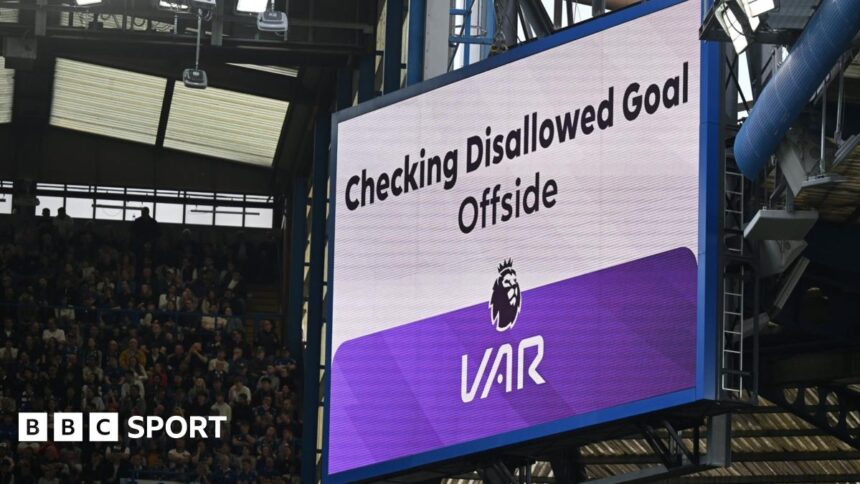
In essence, the benefit of the doubt shifts overwhelmingly to the attacker. The margin for error, often measured in millimeters by VAR, expands significantly. This change aims to achieve several key objectives:
- Promote More Goals: By allowing more attacking runs to remain onside, it should lead to more goal-scoring opportunities.
- Reduce Controversial VAR Calls: Fewer agonizingly close offside decisions that frustrate fans and players alike.
- Encourage High Defensive Lines: Defenses may push higher to compress space, potentially creating more room for midfield play and counter-attacks.
Expert Analysis: The Potential Game-Changer and Its Ripples
The potential impact of this rule cannot be overstated. Tactically, it could revolutionize team setups. Defenders, particularly center-backs, will face a monumental adjustment. The instinct to step up and play an offside trap becomes far riskier, as attackers can lean further forward. We may see a trend towards faster, more recovery-focused defenders and a potential decline in the high-line, offside-trap systems employed by some top clubs.
Conversely, for attackers and creative midfielders, this is a liberation. The fear of being caught offside by a toenail diminishes. Runs can be timed with a focus on explosiveness rather than pixel-perfect precision. This could lead to a renaissance for pacey strikers and through-ball specialists. The role of the assistant referee also evolves, from looking for any overlap to judging a clear separation—a potentially simpler, if still challenging, task.
However, the trial is not without its concerns. Some purists argue it unfairly handicaps defenders and could lead to a basketball-style, end-to-end game that erodes strategic defensive play. There are also questions about implementation: how much ‘daylight’ is clear daylight? While it reduces millimeter calls, it may introduce new debates about the definition of a gap. The CPL’s season will be a crucial data-gathering exercise to answer these very questions.
Predictions: Will Daylight Spark a Global Revolution?
The world will be watching the CPL’s 2024 season with intense curiosity. If the trial is deemed a success, the ripple effects could be swift and profound. Predictions for the trial’s outcome and legacy include:
- Immediate Increase in Goal-Mouth Action: Early CPL games will likely see more goals and big chances as players and coaches adapt.
- A Showcase for Attacking Talent: The league could become a magnet for young, offensive players looking to shine in a system designed for flair.
- Global Adoption Pathway: If data shows more goals, faster play, and fan approval, IFAB could roll the rule out to other leagues, potentially including MLS or lower-tier European competitions, within a few years.
- Resistance from Traditional Powers: Major European leagues, steeped in tradition, may be slower to adopt, but the pressure to modernize and increase entertainment value will be significant.
The ultimate prediction is that the ‘daylight’ rule will prove to be a net positive for the entertainment product on the field. It aligns with modern sport’s trajectory toward favoring offense and clarity. The CPL, in its role as pioneer, could be remembered not just for an ‘icicle kick,’ but for helping to thaw one of soccer’s most frozen rules.
Conclusion: Canada’s Bold Step into Soccer’s Future
The Canadian Premier League’s trial of the ‘daylight’ offside rule is more than a simple preseason experiment; it is a courageous foray into the future of soccer. From the frozen tundra of a historic final to the cutting edge of the sport’s laws, the CPL continues to demonstrate that its ambition is as vast as the country it represents. This trial has the potential to unlock attacking play, reduce technological frustration, and reshape defensive tactics worldwide. While questions remain, the very act of testing this change is a victory for innovation. As the world watches, the CPL isn’t just playing a season—it’s conducting a global audition for a brighter, more open, and goal-filled future for the world’s game. The daylight, it seems, is breaking in Canada first.
Source: Based on news from BBC Sport.