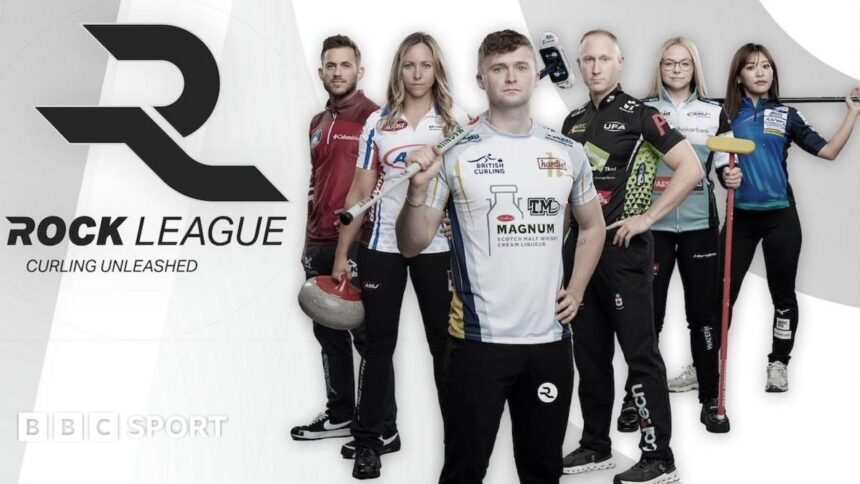
Will Rock League’s Entertainment Gamble Become Curling’s Future?
The roar of the crowd echoes through the historic rafters of Toronto’s Mattamy Athletic Centre, but the source of the excitement is unexpected. It’s not a last-second hockey goal, but a perfectly executed double-takeout. The ice is lit in vibrant hues, team jerseys look like they belong in a major football league, and the pace is relentless. This is Rock League, and it is attempting nothing less than a radical reinvention of one of winter’s most tradition-steeped sports. As curling faces its perennial post-Olympic hangover—the struggle to convert quadrennial fascination into year-round fandom—this new professional circuit is betting big that entertainment, speed, and star power are the answers.
The Olympic Conundrum and the Push for Professionalism
Every four years, curling enjoys a glorious, fleeting moment in the global spotlight. Living rooms become amateur strategy sessions, the “roaring” game trends on social media, and skip personalities become household names. Then, the flame goes out, and the sport recedes to its dedicated, passionate, but niche following. This cycle is the sport’s greatest challenge and opportunity. For decades, the curling calendar has been dominated by national championships, World Championships, and the Grand Slam of Curling events, which, while prestigious, often struggle to capture a consistent, mainstream broadcast audience outside of Canada and a few European strongholds.
Rock League enters this landscape as a direct challenge to the status quo. It is conceived not as another tournament, but as a global franchise league, featuring six mixed-gender teams representing cities worldwide, from Toronto and New York to Oslo and Zurich. Its founders are not just curling insiders; they are sports marketing veterans looking to apply the lessons of successful, fan-centric leagues like the IPL or Formula 1 to the pebbled ice. The core question is stark: can curling thrive as pure, unadulterated sport, or must it evolve into a sportainment product to survive in the modern media landscape?
Deconstructing the Rock League Format: Fast, Furious, and Fan-Friendly
To understand Rock League’s vision, you must first understand its radical rulebook. This is not your grandfather’s curling. The league has engineered its format to prioritize drama, accessibility, and pace, stripping away elements it sees as barriers to new viewership.
- Six-End Sprints: Games are a blistering six ends, not the traditional ten or even the eight seen in some Slam events. This condenses the action and amplifies the importance of every single stone from the very first throw.
- The “Free Guard Zone” is Gone: In a stunning move, Rock League has eliminated the three-rock free guard zone rule. This opens the door for aggressive, early-game takeouts, potentially leading to more scoring and less cautious, defensive setups.
- Power Plays and the “Hammer” Lottery: Each team gets one “Power Play” per game, allowing them to position the center guard off the bat. Furthermore, last-stone advantage (the hammer) is not decided by a draw-shot challenge but by a random draw, adding an element of unpredictable strategy from the outset.
- Mixed-Gender Teams & Shot Clocks: Every team must field two men and two women, with no positional restrictions, promoting true gender equity. A rapid 22-minute per-side shot clock keeps the game moving at a breakneck speed for players and viewers alike.
This format is a calculated risk. Purists may balk at the changes, arguing they dilute the sport’s strategic soul. But Rock League’s counter-argument is clear: for a new audience, complexity is the enemy. Fast-paced gameplay and constant high-stakes moments are the currency of attention in today’s digital world.
Analysis: The High-Stakes Gamble of Glamorizing the Ice
The launch at the Mattamy Athletic Centre is more than just a tournament opener; it’s a live prototype. The league’s success hinges on several critical factors beyond the on-ice rules. First, the broadcast production is paramount. Expect immersive mic’d-up players, cutting-edge shot-tracking graphics, and commentary that explains nuance without patronizing. The BBC’s coverage of the semis and final on Sunday, 12 April, via iPlayer and their digital platforms, will be a crucial test case for its international appeal.
Second, can it attract and sustain star power? The initial franchise drafts have pulled in a compelling mix of Olympic medalists and charismatic, top-tier talent. But for the league to be viable, it must become a financial and professional destination, not a curiosity. This requires long-term investment, consistent media deals, and building narratives around teams and personalities that transcend the sport itself.
Finally, there’s the delicate balance of honoring tradition while courting novelty. Rock League isn’t seeking to replace the Brier or the World Championships. Instead, it aims to be a complementary, gateway product. The hope is that a fan drawn in by the lights and music of Rock League might later appreciate the tense, drawn-out strategy of a traditional tournament final—much like how Twenty20 cricket created new fans for Test matches.
Predictions: A Niche Sensation or a Game-Changing Force?
Predicting the trajectory of Rock League requires looking at multiple potential futures. In the short term, it will undoubtedly generate buzz. The novelty, the condensed format perfect for highlights, and the sheer audacity of the venture will attract curious sports fans. The initial events in Toronto will likely feel like a successful proof of concept—energetic, different, and professionally executed.
The medium-term challenge is sustainability. Can this model work in markets without deep curling roots like New York or Zurich? Will broadcasters commit beyond an initial trial? The league’s fortunes may well depend on its ability to create must-watch, water-cooler moments that break through the noise of the broader sports calendar.
Long-term, Rock League’s most significant impact may be as a catalyst. Even if the league itself finds a stable, niche audience, its influence could force the entire sport to reconsider its presentation. Elements like improved pacing, enhanced athlete marketing, and more dynamic production could filter back to the traditional game. At its most ambitious, Rock League could create a new, parallel pathway for professional curlers and establish a truly global league structure that the sport has never had.
Conclusion: A Bold Throw for the Future
As the first stones slide in Toronto, Rock League represents the most provocative answer yet to curling’s Olympic conundrum. It is a declaration that for the sport to grow, it must be willing to change, to package its inherent drama in a new, vibrant wrapper. It is a high-risk, high-reward double-takeout attempt against the granite of tradition.
Success will not be measured solely by ratings for the finals on the BBC this April, but by whether it can ignite a lasting conversation and attract a new demographic to the sport. Rock League may not become “the” future of curling, but it is forcefully arguing for a future where entertainment and athleticism are not opposing forces, but partners. In doing so, it has already accomplished one thing: it has made the roaring game a topic of conversation far beyond the confines of dedicated curling clubs. The stone is in motion; now, the world watches to see where it finally comes to rest.
Source: Based on news from BBC Sport.