Naomi Osaka and Sorana Cirstea’s Icy Australian Exchange: A Clash of Generations and Expectations
The Australian Open is renowned for its scorching heat and fiery on-court battles. But on Thursday, a different kind of chill descended on Melbourne Park, one that had nothing to do with the weather. Following a grueling three-set second-round match, the customary net cord handshake between Naomi Osaka and Sorana Cirstea transformed into a brief, tense exchange, capturing the attention of the tennis world and sparking immediate debate. While the scoreboard read a 6-3, 4-6, 6-2 victory for Osaka, the post-match narrative was suddenly about more than just forehands and backhands.
The Moment That Spoke Volumes
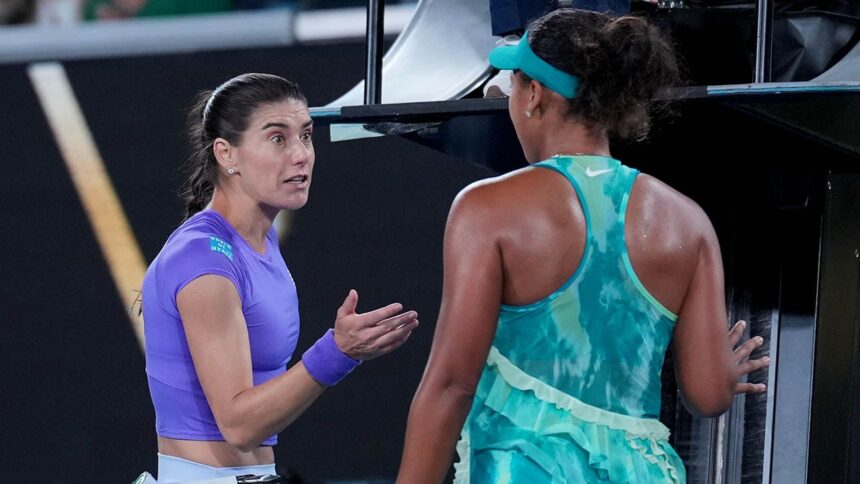
As the final ball was struck, the scene followed a familiar script: the victorious player, Osaka, let out a roar of relief and celebration, a cathartic release after a challenging battle. Cirstea, the seasoned Romanian veteran, gathered her belongings and approached the net. What happened next, however, deviated from the standard script. Cameras clearly captured Cirstea speaking to Osaka at length during the handshake, her expression stern and words measured. Osaka, initially celebratory, listened, offered a brief, seemingly terse reply, and quickly moved away. The body language was unmistakable—a stark, icy contrast to the warm Melbourne sun. This was not the perfunctory “good match” exchange; this was a pointed conversation that left Osaka visibly eager to exit the stage.
In her post-match press conference, Cirstea provided some context, though she kept the specifics close to her chest. “At the net, I told her that she should have more respect for the opponent,” Cirstea revealed. She alluded to Osaka’s celebratory shouts and fist pumps coming directly after Cirstea’s unforced errors, a practice some veterans consider gamesmanship or a breach of unwritten tennis etiquette. Osaka, for her part, addressed it succinctly: “I didn’t think I was doing anything disrespectful,” she stated. “I was just really pumped to be in the third round. I’ve been away for a while.”
Decoding the Etiquette: Passion vs. Protocol
This post-match tension is more than just a petty spat; it’s a fascinating microcosm of the evolving culture and generational divide in professional tennis. To understand it, we must examine the unwritten rules and the clash of perspectives.
- The Veteran’s Viewpoint (Cirstea): For players like Sorana Cirstea, who has been a tour mainstay for over 15 years, tennis has a traditional code of conduct that extends beyond the official rules. Celebrating your own brilliant winner is one thing; vocally exulting in an opponent’s mistake is often viewed as poor form. It’s seen as kicking an opponent when they’re down, adding mental insult to the physical error. This old-guard etiquette emphasizes a certain stoic respect, where you let your racket do the talking and acknowledge your opponent’s efforts, especially in defeat.
- The New Generation’s Ethos (Osaka): Naomi Osaka represents a new wave of athletes for whom raw, unfiltered emotion is an integral part of competition and personal expression. For her, the shouts and fist pumps are a release of intense pressure, a self-motivation tool, and a celebration of her own resilience—not a direct slight against her opponent. Having returned from maternity leave and navigating the immense pressure of a Grand Slam comeback, her emotional display was likely a genuine reflection of her journey back to the top.
This incident highlights a fundamental question in modern sports: where is the line between passionate self-expression and disrespectful gamesmanship? The answer is often subjective, filtered through the lens of experience, personality, and the heat of the moment.
Expert Analysis: The Pressure Cooker of Comeback Tennis
From a tactical and psychological standpoint, the match itself was a classic case of comeback pressure meeting veteran grit. Osaka, a four-time Grand Slam champion, is not just playing matches; she is managing the colossal weight of expectation that accompanies her return. Every early-round match feels like a final, a must-win to prove to herself and the world that she still belongs at the pinnacle of the sport.
Sorana Cirstea, a savvy and powerful opponent, expertly exposed the lingering rust in Osaka’s game in the second set. She pushed Osaka to the brink, forcing her to dig deep into her champion’s resolve. Osaka’s emotional reactions, therefore, can be interpreted as vital emotional fuel—a way to pump herself up and stave off nerves when her game momentarily faltered. For Cirstea, who was battling equally hard and making her own errors under pressure, those same reactions may have felt like salt in a wound. The Australian Open stage magnifies these tiny interactions, turning a net-cord conversation into a global headline.
Predictions: Fuel for the Fire or a Momentary Frost?
What does this mean for both players moving forward in the tournament and beyond?
- For Naomi Osaka: This incident could serve as a pivotal moment in her comeback arc. If she internalizes it as criticism, it could become a distraction. However, the more likely outcome is that a champion of her caliber uses it as a hardening agent. She has historically been a player who thrives when she funnels external noise into on-court focus. This tennis controversy might just sharpen her resolve, reminding her that every opponent will scrutinize her game and her demeanor. Expect her to play with even more controlled intensity, using the experience to strengthen her mental fortitude.
- For Sorana Cirstea: While her tournament is over, Cirstea has made her point within the locker room. She stood up for a principle she believes in, representing a segment of the tour that values traditional competitive respect. Her actions will resonate with peers who share her viewpoint, reinforcing that even in an era of big personalities, certain lines of decorum are still policed by the players themselves.
- For the Sport: This is not the first nor will it be the last “cold handshake” in tennis. It underscores the sport’s ongoing dialogue about emotion and etiquette. As the game welcomes more expressive personalities, these flashpoints will continue to occur, ensuring that the drama at the net sometimes rivals the drama on the court.
Conclusion: More Than Just a Handshake
The icy post-match moment between Naomi Osaka and Sorana Cirstea was a fleeting incident, but its implications are lasting. It was a collision of two legitimate perspectives: the veteran guarding the sport’s traditional codes of respect, and the returning superstar using raw emotion to power her high-stakes comeback. It was not about right or wrong, but about perception and generational shift.
Ultimately, this Australian Open tiff reminds us that tennis is a human drama played with rackets. Beyond the grand slams and the prize money, it’s a sport filled with immense pressure, fragile egos, and clashing cultures. As Osaka continues her journey back to the top, she will carry not just the hopes of her fans, but also the scrutinizing eyes of her peers. And as the tour evolves, the conversation about what constitutes true respect in the cauldron of competition will continue, one handshake at a time.
Source: Based on news from Fox Sports.